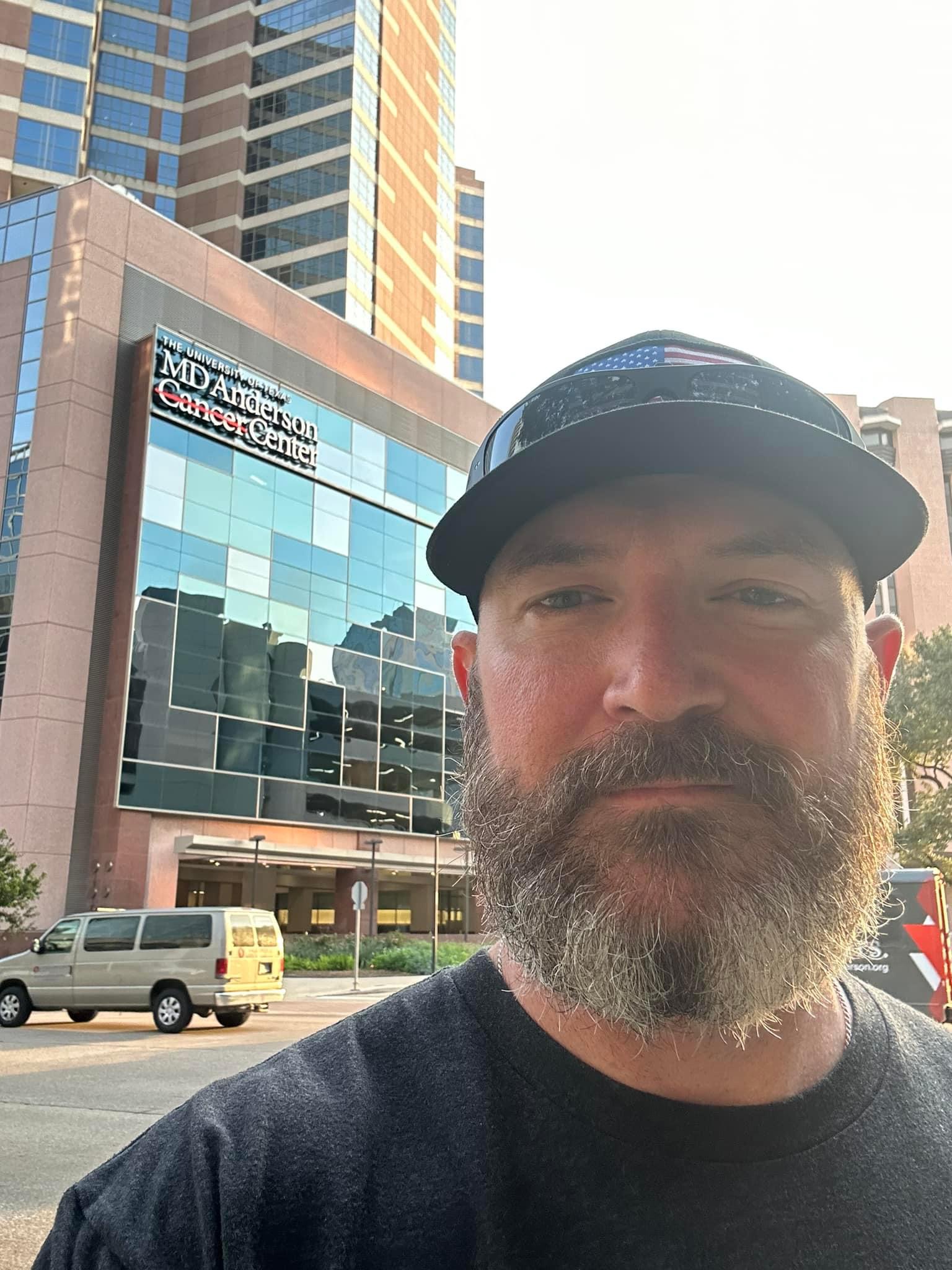
Keegan Murphy
“The Devil whispered in my ear: ‘You’re not strong enough to withstand the storm.’ I whispered back: ‘I am the storm.”
-Adharanand Finn
Note: this chapter was published in April of 2024.
Laura Hillenbrand’s book, Unbroken: A World War II Story of Survival, Resilience, and Redemption, captivated me when I read it. Its pages, detailing the indomitable spirit of Louis Zamperini, enveloped me in awe.
While I admired Zamperini’s endurance and achievements, the tale also cast a lingering shadow of melancholy on my thoughts. It was for those who, having covered the same pages, doubted the existence of such resilience and heroism beyond the realm of fiction.
I wondered how many other readers of the same book harbored a sense of missed connection, recognizing their slim chances of ever crossing paths with such an extraordinary figure in their own lives.
I felt no such missed connection, because seven years prior, I met Murph.
When people first experience Keegan Murphy, they are confronted by the physical archetype of the perfect warrior—broad shoulders, square jaw, thick neck, and eyes alight with formidable determination. His look gives an air of inevitability in anything he chooses to do. And yet there is so much more that belies his poster-boy appearance.
Those who know Keegan Murphy deeply revere him for what they see in him daily:
A husband’s commitment.
A father’s love.
A son’s precociousness.
A brother’s example.
A friend’s loyalty.
A Marine’s honor.
A firefighter’s bravery.
A SWAT team member’s resolve.
A believer’s faith.
And most recently, a cancer survivor’s unwavering perseverance.
These are but brief glimpses into what makes the man known as “Murph.” Even the most carefully crafted words often fail to adequately capture the totality of someone who lives to such a high standard every minute of his life. Such is the case here. I hope that I can come close to describing how remarkable he really is, but I do expect failure in this undertaking.
His friends and co-workers point to him as the ultimate competitive advantage in any endeavor. “But sir, we have Murph,” was an actual retort I received after expressing pre-operation concerns about the plan in place for a critical mission in Iraq in early 2005.
His story is woven not from the threads of myth but from the fabric of reality. Nor does it require the reader to suspend disbelief. Rather, his life serves as a testament to extraordinary outcomes born from the daily pursuit of excellence.
Keegan is one of the quietest and most unpretentious leaders I have ever known.
He may also be the best.
Keegan’s humility is so deep that it often cloaks his greatness from others. You could talk to him for two hours and he might not say a single thing about himself. “You’ll have to ask him yourself if you want to know something. He won’t volunteer information,” said Jeffrey Powley, a Captain who served with Murphy at Mountain View Fire Rescue, reflecting on his character.
Faith, family, humility, service, and mission accomplishment define Keegan. He possesses the kind of relentless spirit and resilience I once believed possible only in the cinematic universe or on the pages of a perfectly crafted, but fictitious, tale.
This chapter aims to eliminate the incredulity gap that stories like Murph’s generate. Through an examination of his life, we will explore not just the battles fought in the sands of Iraq and the integrity he demonstrated daily as a firefighter, but also the power of belief and the enduring human spirit that can shine brightest in the darkest of times.
Let’s cross the next phase line of this collection of stories that are part of Why They Served and embark on the journey of learning about Keegan Murphy. His is a story of unassuming but fierce valor, reminding us that heroes indeed walk among us.
Building a Warrior Servant
Recently, my wife and I embarked on a drive from Milwaukee to Rhinelander. As a Wisconsin native, I’m well-acquainted with major locales like Milwaukee, Madison, and Green Bay. Even Stevens Point, Oshkosh, and Wausau are quite familiar to me, having traveled to those places for our oldest daughter’s grade school basketball tournaments. However, as we journeyed north of Hartford and Slinger, we ventured into less familiar territory and soon arrived in Fond du Lac.
Fond du Lac is a quaint city in Wisconsin, home to approximately 44,000 residents. It is a well-planned community; its road layout is straightforward and the businesses lining its core streets cater efficiently to the essential needs of its residents. During our journey, we stopped for breakfast at The Diner on South Main Street. As Jenny and I surveyed the street before entering the restaurant, we felt as though we had been transported to the set of the movie Back to the Future.
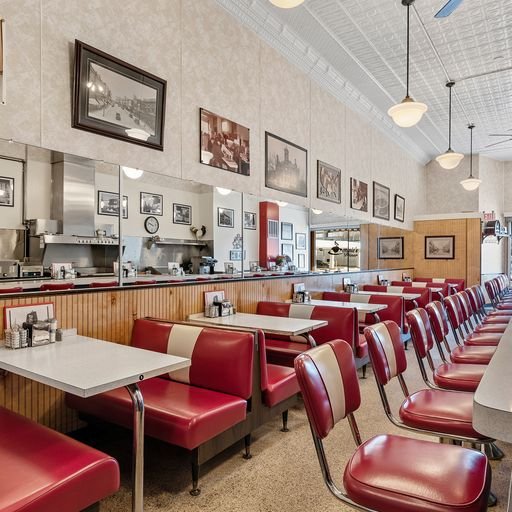
The Diner1, a true small-town eatery, served great food, recognized its customers, and echoed the simpler times of yesteryear. As we ate, I reflected on the many good, solid people this town must have raised, including one well-known to us —Murph, who grew up in Fond du Lac.
From his early years, Keegan seemed marked for exceptional achievements. What laid the foundation for such a promising future? Like many youngsters, athletics played a significant role. “I played a lot of sports,” Murphy recounted. “I was active, and for the most part I stayed out of trouble.”
“Keegan was always trying a new sport, seemingly unstoppable,” recalls Karen Ann Suhs, Keegan’s mother, reminiscing about his dynamic childhood. This phase of his life was distinguished not only by his athleticism but also by displays of leadership and a deep sense of responsibility towards others.
Murph served as a protector from a young age. Karen remembers, “When he was growing up, he was always protective and so good to his little sister who was six years younger.” His sister, Kaleigh, agrees. “I remember Keegan being a great big brother,” she said.
Keegan would include Kaleigh in many of the activities around the neighborhood, and games in Fond du Lac Wisconsin often centered around the kids’ collective love of hockey. “The boys would elect her as their goalie when playing shinny2 stick hockey in the rec room,” recounted Karen.
Kaleigh would take her turn playing goalie, which could be a very dangerous position in such close quarters. But Murph had a solution. “He tied pillows to me to make me safe. I looked like the Michelin Man,” Kaleigh said with a laugh. “He always was very caring if I happened to get hurt from time to time. He always looked out for me as a big brother, and I always felt very safe with him.”
Kevin Murphy provided a poignant reflection on his childhood memories with his older brother. “I have too many memories and not enough stories, if that makes sense?” remarked Kevin. “The best way I can describe him, though, is he is one of the greatest role models you could possibly have.”
One significant challenge in Murph’s early life was his parents’ divorce. Keegan was only three years old when they separated. His father, Mike, returned to his native Chicago area, while his mother, Karen, moved back to her hometown of Fond du Lac. “I had a great childhood and was raised in an amazing loving environment,” Murphy recalls. “However, my parents were divorced and although I love my stepparents dearly, I remember wishing I had the same family as everyone else.”
Murph reflected on his past without any bitterness, his deep affection for his whole family evident in every word. Nevertheless, he has given considerable thought to the impacts divorce had on his own development and that of other children who experienced the same. “Not even necessarily bad, but it does affect their life,” Murphy contends. “I think that added a form of constant stress to my life that I learned to live with and normalize.”
Murph deeply appreciated the efforts his parents and stepparents made to ensure he grew up in a loving and structured environment. “My Mom and my Dad tried very hard to make things as normal as possible,” Murphy explained. “I know that, and I love them for that. They still talk to this day and are extremely cordial with each other.”
Keegan also acknowledged the positive impact the extended family dynamic had on his life. “My stepparents were and are amazing people, who are not my blood, but I love them the same,” Murphy said. “They raised me, cared for me, and loved me equally, the same as if I was their biological child.”
Murph believes that navigating his parents’ divorce provided him with a significant life advantage. “I also think it helped me develop the sense of being comfortable in any environment I was in. It gave me an ability to connect with people and adapt to my surroundings easier,” he reflected. “I’m not sure at what age, but I began to understand that my family was very unique, and it made me the person I am today. I don’t think it’s possible to do a better job raising me than they all did collectively.”
Growing up in the vibrant community of Fond du Lac, Murph absorbed the core values of hard work and integrity, shaping him into a model of resilience and dedication. Viewed from this perspective, his transformation from a protective, sports-loving child into a man with a steadfast commitment to service seems a natural progression.
One remarkable aspect of Keegan’s extended family is their deep-rooted military heritage. Considering the number of relatives who served, it almost seemed inevitable that Keegan would eventually follow in their footsteps.
While Murph was in high school, his stepmother was actively serving in the Army. An uncle and all four of his grandfathers had served as well. Their influence on him was significant. “I grew up holding my grandfathers on a pedestal,” Murphy explained. “I wanted to do what they did.”
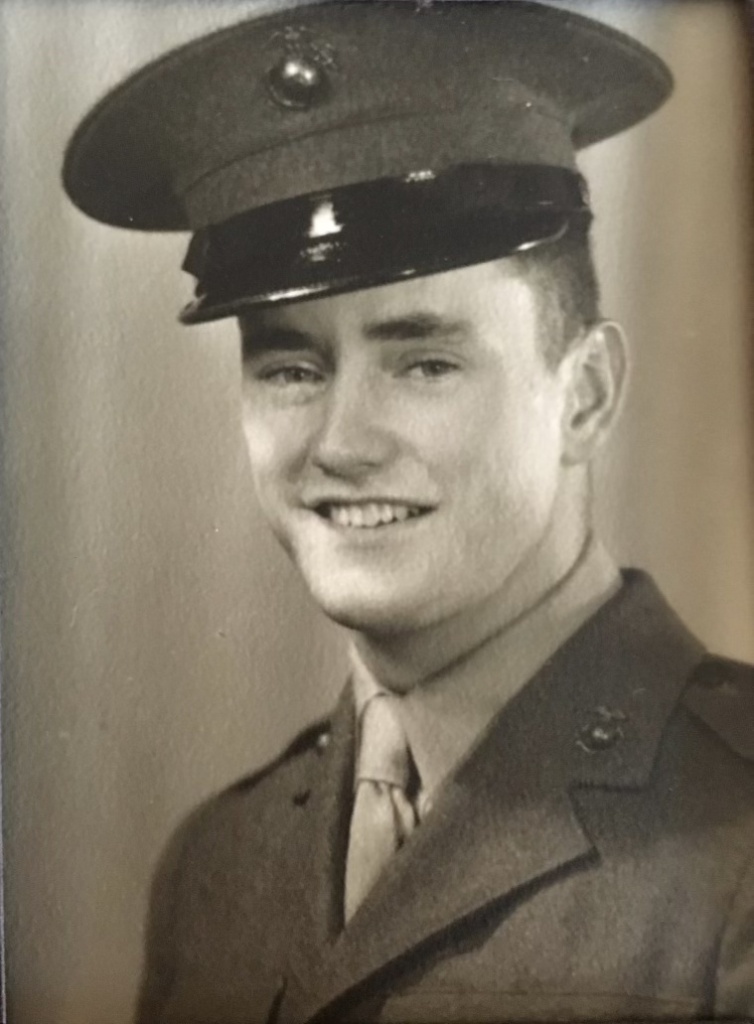
Murph’s paternal grandfather, Maurice Murphy, enlisted in the Marine Corps at age 17, towards the end of World War II. He served as a communication specialist, and his enlistment concluded before the Korean War began. “He was my only familial link to the Marine Corps that I know of,” Murphy said, referencing the branch he would eventually choose to join.
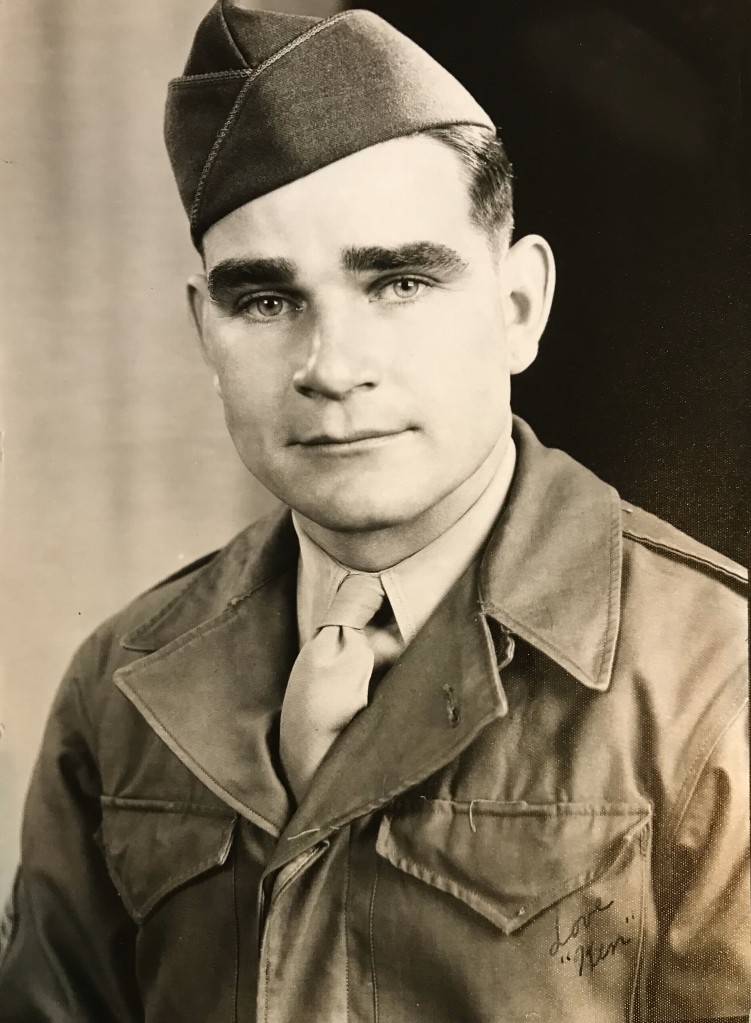
Ken Suhs, the father of Keegan’s stepfather, served in the Army Air Corps and Air Force during World War II and Korea. “Unfortunately, Grandpa Suhs died young, at the age of 51 from a heart attack,” said Murphy.
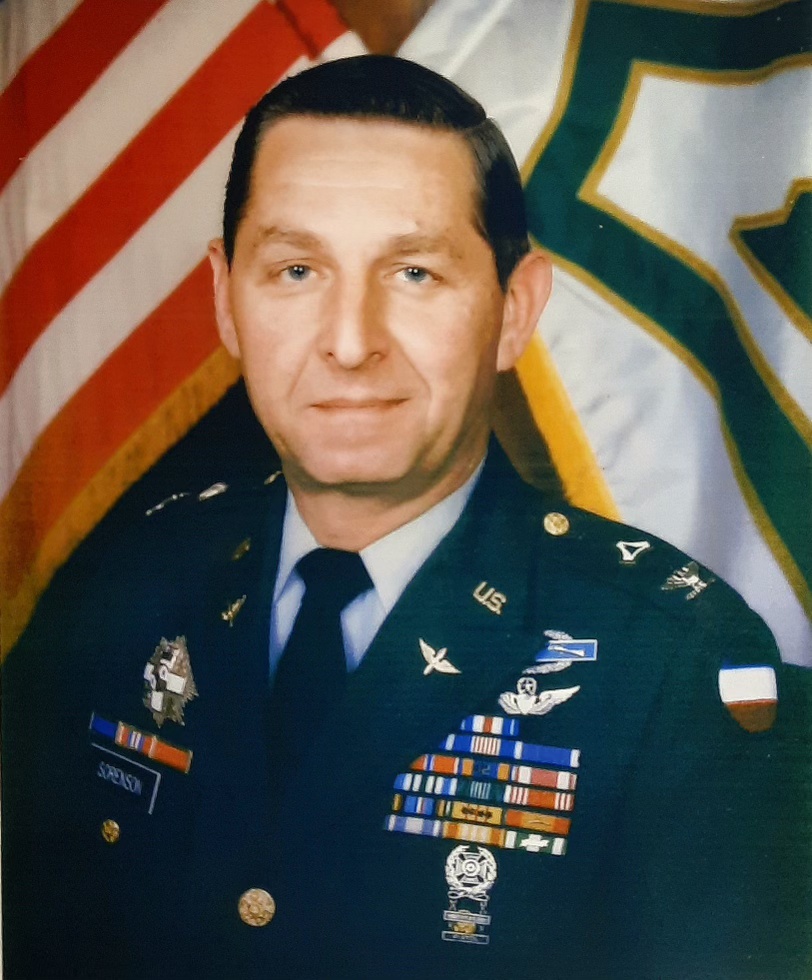
Bill Sorenson, the father of Murph’s former stepmother, pursued a career as an Army officer, retiring as a Colonel and the commander of Fort McCoy3 in Central Wisconsin. At the conclusion of his career, Sorenson was considered for promotion to Brigadier General but declined the opportunity because it required relocating to the Pentagon.
Dutch Bindert, his maternal grandfather, was drafted into the Army during the Korean War. “He has been my biggest influence since I grew up in the same town as him and had the most direct interaction with him,” Murphy shared. “My Grandpa Dutch, or Pop as we all refer to him, is an incredible man.”
Bindert, orphaned at a young age, experienced a very hard childhood. With the loss of his family, the one he would build for the rest of his life was most important to his identity. Because of his geographic proximity to Keegan, he spent a ton of time with his grandson. The positive impact he had on him is apparent, strong, and lasting. “He is the most positive, loving, genuine person I have ever known,” Murphy said.
Diagnosed with stage 4 pancreatic cancer at age 89, Bindert is defying the odds five years later, embodying stalwartness, courage, and gratitude daily. “I have never heard him complain about anything, ever, in my entire life,” stated Murphy.
The effect of his grandfathers’ military service on Murph was unmistakable to those around him. “I remember Keegan always looking up to his grandfathers,” said Kaleigh. “I think he holds them in very high regards and thought of them as role models and wanted to follow in their footsteps.”

Despite his family’s strong military heritage, Murph did not initially see himself as a likely candidate for the armed forces. “I don’t think anybody who grew up with me in high school would have thought that this dude was going to the Corps for sure,” Keegan said while being interviewed during his appearance on an episode of the Fragout Podcast in November 2023.
One of the intriguing aspects of his decision to join the military was that it wasn’t out of necessity. Future fellow Marine, Sam Wollersheim, reflected, “To be honest, I’m not sure he belonged in the Marine Corps. I always looked at him and thought, ‘what are you doing here?’ I know this sounds bad, but I always thought he was better than being an infantry grunt.” Considering the high regard for infantry roles in the Marine Corps, Wollersheim’s comment serves as a significant compliment, recognizing Murph’s exceptional abilities.
“Specifically, why did I join the military?” Murph often pondered this question, much like others have. “I always felt like I should serve our country, more of a calling I guess.” It’s intriguing how many perceive military service as an imperative, almost as though it were their fate. In our country, there remains a debate over the benefits and drawbacks of an all-volunteer military versus mandatory service. I see valid points in both arguments, but I’ve also witnessed remarkable outcomes from individuals like Murph who chose to serve of their own volition, rather than being compelled.
“Why should I rely on other people to serve and protect my family if I myself wasn’t willing to stand up and raise my hand?” Murphy asked. “I’m no better than anyone else,” he stated, a sentiment that perfectly encapsulates his character. Throughout his career, this wouldn’t be the last time he chose to put himself in harm’s way to set an example for others about doing the right thing. His internal compass perpetually points to true north.
Murph went further on his thoughts for why he ultimately signed up. “The thought of not serving just seemed entitled to me, like a handout, relying on others to protect our ideals and our way of life,” he explained. “I also thought of it as an adventure. I liked the opportunity to meet new people, go to new places all around the country and the world, learn new skills, and test myself. I was close with my three living grandpas, and I also wanted to make them proud. I remember wanting to make my Dad proud as well.”
Although it might have appeared inevitable that he would join the military due to his family’s strong service background, the specifics of when and which branch he would choose were not anticipated by his family. “It was a huge surprise when Keegan announced he was joining the Marines,” Karen recalled. At the time, she was employed as a nurse in the labor and delivery wing of a local hospital. During one of her shifts, she was called to the front desk, where Keegan stood alongside a Marine recruiter. “The first thing out of his mouth was ‘Mom, I need you to sign on this line and give your permission because I’m joining the Marines.’ To say I was caught off guard would be an understatement.”
While Keegan’s father, Mike, never pressured him to join the military, he wasn’t surprised when Keegan chose that path. “He loved all of his grandfathers,” Mike noted, recognizing the deep influence his son’s grandfather Dutch had on him. Mike’s pride swelled when Keegan decided to join the Marine Corps. “It made me that much prouder of him when he enlisted,” Mike expressed.
The decision to join the Marines, though surprising to some, retrospectively aligned with Keegan’s driven character. “The moment Keegan and a recruiter appeared, seeking my permission for his enlistment at 17, was a testament to his resolve,” Karen described, her voice tinged with both pride and past apprehension. His choice to serve, deeply influenced by a family legacy proud of its military involvement, represented not only a personal challenge but also a tribute to his heritage. Mike Murphy recalls a phone call where Keegan said, “Mom is not so keen on this, but I am going in.”
Keegan’s decision to enlist in the Marines during high school starkly contrasted with his peers’ uncertainty about their futures. “We were getting close to graduating high school, and I had absolutely no idea what I wanted to do with my life,” remembers Abe Searl, Murph’s childhood friend and now brother-in-law. “Keegan, however, was proudly going to join the Marine Corps and there wasn’t a damn thing that would have changed his mind.”
Keegan initially signed up for active duty under a contract that promised immediate placement in a reconnaissance battalion after he completed the School of Infantry (SOI), contingent upon passing the recon indoctrination test. If successful, the military would revise his orders to send him directly to a recon battalion; if he failed, they would reassign him to an infantry unit. However, Murph reevaluated his future and opted for a different path. “I ended up changing my mind pretty late because our country wasn’t at war or in any major skirmishes in 1999,” Murphy recalled. “I had dreams of a college degree as well and thought the reserves allowed me to work on both at the same time.”
While studying at UW-La Crosse, Murphy met Mick Gillitzer, affectionately known as ‘Gilly’ by his friends. Gilly, who had already completed four years of active-duty service in the Marine Corps, was a member of the La Crosse football team while working toward his degree. There was only one place that these two titans would meet. “We met in the gym one day,” recalls Murphy. “One of us was wearing a USMC shirt or something we just started talking.” Gillitzer was considering getting into the reserves and a few months later did that, joining Golf Company, the reserve infantry company located in Madison.
Murph also met Andy Wentworth, another Marine who had recently joined Golf Company, while at school. They would become best of friends over the next 20+ years, and right from the beginning, Wentworth was impressed. “He has a strong sense of duty – that has always been abundantly clear. It’s almost like his sense comes from a spiritual connection with his ancestors,” Wentworth observed. “I don’t know how else to describe it. He has a deep sense of tradition and of right and wrong.”
After enlisting, Keegan completed both boot camp and the School of Infantry before joining Golf Company, which would become his ‘tribe’ for the next six years.

Gillitzer recalls being struck by Murph’s discipline from their first meeting. While attending school, Murph chose to enter a body-building competition. “It is one thing to consider the regimented workouts, but I was also impressed with his ability to manipulate his diet,” Gillitzer commented. “Sounds trivial, but you have to consider that he was living in a college house where others were constantly coming and going, eating pizza and partying.”
Wentworth joined the Marine Corps primarily to become part of an elite organization where love for others transcends familial bonds, engendering a readiness to risk everything for one another. From the outset, Murph set the benchmark for the type of warrior Wentworth aspired to serve alongside. “For me, Keegan was that Marine that put a face to those theoretical ‘why’ conversations I had as a 17-year-old kid trying to understand what brotherhood was.”
Journey to Iraq
As the events of 9/11 unfolded, the air was tense with anticipation among the members of Golf Company, including Murph, as they braced for what they assumed would be their unit’s imminent activation. While not exactly eager for combat, there’s always existed a prevalent feeling among warriors about not wanting to be ‘left behind’ should others deploy. This sentiment, however, wasn’t mirrored by their families. Keegan’s father, for instance, didn’t expect the overseas conflict to necessarily involve his son. “I did not assume after 9/11 that Keegan would go to war, no,” Mike recalls.
When a deployment for Golf Company didn’t materialize quickly, that created a level of angst in the Marines who welcomed the opportunity to serve their country in the ultimate of circumstances. “Wentworth and I lived together at that time, and I remember being angry that we hadn’t been activated yet,” said Murph.
Wentworth, like several others, was contemplating a transfer to the active-duty component of the Marine Corps. As he considered his options, he collected any morsel of information he could on what was happening during a very uncertain time in our country’s history. “I was also checking the MARFORRES (Marine Corps Forces Reserve) website often for news of other units being activated. At some point I stumbled onto this UNITAS opportunity.”
UNITAS, established in 1960, stands as the world’s longest-running multinational military maritime exercise, drawing participants from approximately 20 countries across Central and South America, the Caribbean, Europe, and Africa annually.4
In 2002, Murph and several other Marines from Golf Company volunteered to join the Marine Ground Combat Element for that year’s UNITAS deployment. This would present a unique opportunity for them to engage in extensive training and experience different regions of the world.
During the unit’s summer annual training prior to the UNITAS deployment, Murph earned the opportunity to compete to join recon again. “Long story short, I had finished my Zodiac Coxswain course at SOTG (Special Operations Training Group), and MCIWS (Marine Corps Instructors of Water Survival) school, and then was given the opportunity to compete in the recon indoc before our UNITAS float.”
The recon unit participating in that deployment had two slots available. The plan was to conduct an indoctrination to select two Marines to join the detachment for the float. After returning stateside, these individuals would transfer to a reserve reconnaissance company and enter the recon training pipeline.
Mick Gillitzer, who also participated in the deployment, recalled the extraordinary effort Murphy put into preparing for the course. “The course boasts a high washout rate just based off the physical demands,” Gillitzer noted. “While everyone enjoyed their time off, Keegan would be pushing the limits in the pool.” Murph seized every moment of spare time to enhance his swimming skills to the highest level possible. This was reflective of the continuous improvement mindset he applied to every situation.
It was the ideal opportunity for Murph, who thrived in the highly competitive environment. The indoctrination day began at 4 am with a memory competition, followed by the Marine Corps annual physical fitness test, which unusually required boots and utilities instead of the standard running shoes and shorts. The day was relentless, packed with back-to-back challenges: multiple obstacle courses, miles-long pack runs, full gear pool swims, and more. Each phase tested the competitors’ limits. Participants also performed disassembly and assembly of all weapons typically found in an infantry squad, recalled items from the memory game that started the day, and concluded with a panel interview with recon leadership. As the grueling day wrapped up late that night, Murphy felt the full impact of the intense challenges he had faced.
“I remember being extremely proud of my performance as I hobbled back to our platoon area tired, bloody, and bruised,” Murphy recounted. His exceptional performance during the competition, which was supported by his ranking in the various tests, was a significant source of pride. Andy Wentworth, who also took part in the indoctrination day, recalled, “Keegan absolutely crushed it. He finished first in every event and the Recon detachment wanted him badly.”
However, within a day, Murph’s aspirations to become a recon Marine were abruptly shattered. His Company Commander informed him that he could not be released from his current role to take the recon slot. The reason given was that Murph was only one of three in the company qualified to serve as an instructor of water survival, and the entire company needed to be swim qualified swiftly for the upcoming deployment. Consequently, he would not be transitioning to recon.
“I allowed this to give me a huge chip on my shoulder and put a bad taste in my mouth towards the entire Marine Corps for quite a while, unfortunately,” Murphy recalled. The news was devastating, and in retrospect, he acknowledges that he let the situation defeat him rather than using it as motivation to improve in other areas. If faced with the same circumstances today, his response would be different. “Nowadays, that would have fueled me and given me such immense purpose and drive to finish first by such a large margin, they would have had no choice but to take me.”
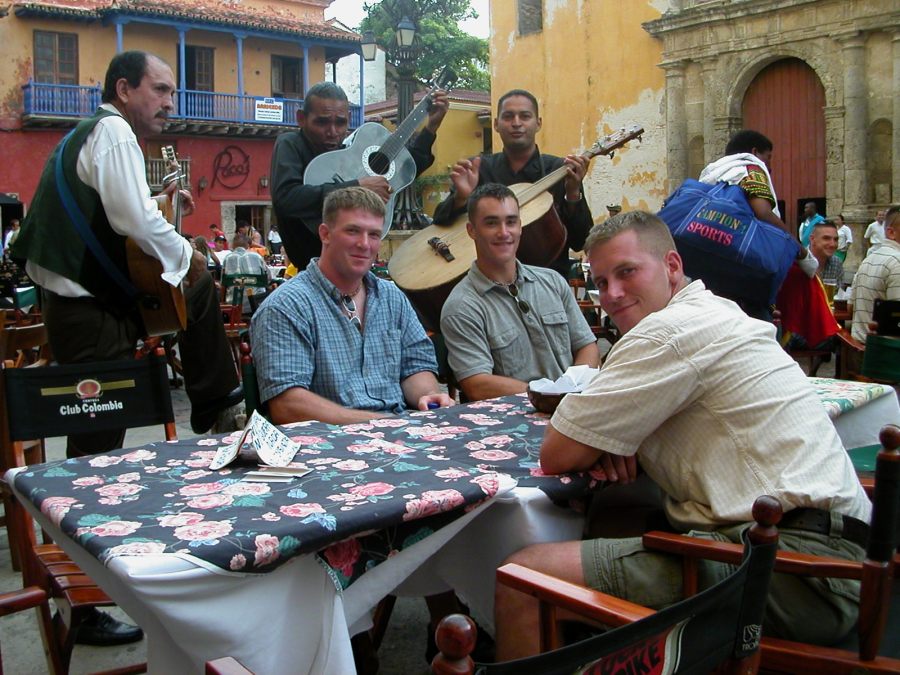
Despite his deep internal disappointment, the way others perceived Murphy’s response to the situation was notable. Andy Wentworth recounted, “Though recon would have been a great fit for him, Keegan never slumped when he returned to his line platoon. He maintained the same positive attitude that always makes everyone want to be around him.”
The contingent of Golf Company Marines completed a successful UNITAS deployment, coming home much better prepared for what might be in front of them. They were on ship for first anniversary of 9/11, and Murphy reflected on the feelings that stirred deep within. “I remember wishing we were doing more, but I was filled with pride,” recounted Murphy. “It was an eerily proud feeling knowing our time was coming.”
Throughout 2003, Golf Company’s parent command, 2nd Battalion, 24th Marines continued to receive increasing signals that a deployment to Afghanistan or Iraq would be in the near future. By early 2004, these orders were confirmed—Golf Company and the rest of the battalion were tasked to deploy to Al Anbar Province in Iraq. As previously described, they were set to take over operations from the 2nd Battalion, 2nd Marines, an active-duty infantry battalion based at Camp Lejeune, North Carolina.
The battalion’s mission would be to capture or kill insurgents within their area of operations to help establish a free Iraqi society. That spring, the battalion utilized their annual training period, at Camp Atterbury, Indiana, to meticulously prepare for their upcoming deployment. In June 2004, they were officially activated and moved to Camp Pendleton, California, where they engaged in three months of intensive training.
As deployment loomed, the anticipation was tinged with complexity. “His service brought about many emotions, pride foremost among them,” his mother Karen remembered, capturing the intricate emotions surrounding Keegan’s commitment to his country. The pride in his service, blended with the anxiety of the unknown, amplified the sacrifice and courage inherent in military life.
Despite the grave nature of their mission, moments of levity broke through, showcasing the resilience and camaraderie within the unit. After all, Murph was part of a strong legacy of silliness that comes when youth, type-A personalities, and the Marine Corps Infantry come together. Brad Jackson, who was one of the squad leaders in Murphy’s platoon, remembers a bunch of members from Golf Company converging on La Crosse one weekend. “After an undefeated day of playing flippy cup, we thought it would be a good idea to get the blow gun out,” said Jackson. “I shot Murph square in the chest with a dart. He yelped, then said, ‘my turn, stick out your hand.”
Murph then proceeded to shoot Jackson from about six feet away directly in the meaty part of his hand. “To this day, I still have the mark from where we sterilized the needles with a lighter.” The next weekend, the two of them had the grand idea to up the ante. “We tested our issued Marine Corps flak jacket against a compound bow from ten yards away,” admitted Jackson sheepishly. “Murph shot me square in the chest, which left a nice welt. This was the spirit of our friendship.”
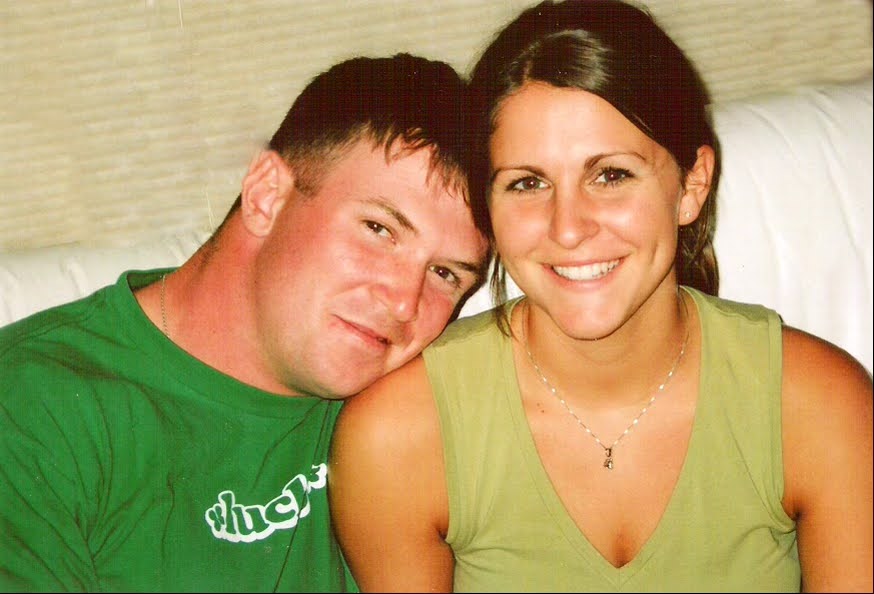
Three months before our unit’s deployment to Iraq, Keegan met Alissa Seitz at UW- La Crosse. Living just across the street from one another, they connected through mutual friends. Alissa was immediately captivated by how different Murph was. “I was intrigued with Keegan because he was so unique, in a good way” remembers Alissa. “While his friends were out partying, he was a college student training for a bodybuilding show and preparing himself to leave on deployment. We ended up talking all night and then I had to leave the next day for my spring break vacation with friends.”
Both Keegan and Alissa fell for each other immediately. “I even told my best friend that this was it for me and I knew I would marry him,” said Alissa. However, Keegan’s impending deployment loomed as a potential disruption to their burgeoning relationship. They spent every day together for the next three months and by the time of the deployment, Alissa’s mind was made up. “He told me upfront that he would be leaving, but at this point, I didn’t care, and I wanted to move forward with our relationship. “
In September 2004, Golf Company completed their pre-deployment training. They boarded planes and flew to the middle east. They were ready.
When Keegan left, Alissa was crestfallen. “This was one of the hardest things that I had to do at that point in my life,” remembered Alissa. “Not knowing much about the military and what war really looked like, I was scared.”
Combat Confidence
As Keegan and the rest of the company arrived in Iraq, they experienced the common mix of emotions typical upon entering a combat environment. Those feeling were highly influenced by their individual ‘reason why’ for being there. “I wanted to serve my country, defend freedom, and fight for those who couldn’t or wouldn’t fight for themselves when I joined. It sounds so cliché, but it was true,” explained Murphy. “Fight for and defend something bigger than myself.”
But for Murph, and many others, those feelings shifted upon experiencing the realities of war. “Once you set foot on foreign soil and it’s no longer training, the priority becomes the guys you’re with,” he explained. Murph felt an intense responsibility for living up to who would be on his left and right. “I would have died for any of the guys I served with,” said Murphy. ”I loved them like brothers, and I still do.” For him, his fidelity to his fellow Golf Company members escalated in priority. “The mission is still the mission, but my grandiose ideals shifted, I believe. It becomes more about who you’re there with than for flag and country. At least, it did for me.”
In the crucible of combat, where danger is a constant companion, competence is everything. During our time in Iraq, we operated in one of the most volatile regions of the country. Amidst firefights, relentless mortar barrages, and under the constant shadow of improvised explosive device (IED) attacks, all trivial concerns found in peacetime evaporated, leaving behind only that which matters most.
In this environment, one learns extremely quickly that the ONLY thing that matters is trust in the person to your left and right. You must be able to count on them, and they have to be able to rely on you. In the Marine Corps, we prided ourselves on being the best at the fundamentals and possessing a mindset that engendered confidence in ourselves and each other. Semper Fidelis is a nuanced and multi-faceted concept. And it isn’t just a slogan – it is our oath.
Murph personified this principle of ultimate dependability. His mere presence could transform uncertainty into certainty, doubt into belief. Nick Vento, a squad leader in 2nd Platoon and one of Murph’s close comrades, captured this sentiment. “Keegan and I were often partners when we would have downtime to play Euchre,” Vento recalled. “He always had a smile on his face and a twinkle in his eye when we would team up. Whenever Keegan was on anyone’s team, be it in cards or the battlefield, I always knew we’d flip a Jack and come out winners.”5
When confidence breaks down in a small unit, bad things happen. History provides numerous examples where a lack of trust led to devastating failure. The military’s terminology itself underscores the importance of this concept; commanders are often relieved due to a ‘loss of confidence,’ emphasizing that confidence, born from competence, is paramount.

A few months into our deployment in Iraq, 3rd Platoon was stationed at FOB (Forward Operating Base) ROW, having recently helped establish our presence in Lutifiyah. We were still contending with daily mortar and IED attacks, as well as sporadic RPG and small-arms fire targeting our base. Identifying and neutralizing the sources of these attacks was critical. Mick Gillitzer led his squad on a patrol south of the base, aiming to occupy a mansion nearby that offered excellent vantage points over several potential insurgent attack routes.
The squad was crossing ASR Jackson, the four-lane highway adjacent to the FOB. Jackson usually saw heavy traffic as it was the primary north/south artery in the area, since MSR (Main Supply Route) Tampa had been closed to civilian traffic. Following standard tactical procedures for such situations, Gilly positioned himself amidst a cluster of vehicles to halt the flow and allow the rest of the squad to safely cross the highway.
“I attempted to cross thinking that the vehicles would see me and stop but one didn’t,” explained Gillitzer. “A Toyota pickup was approaching him at a high rate of speed. Murphy, in an overwatch position, tracked the vehicle closely. He couldn’t discern the driver’s intent but was certain, “For sure, he was not going to stop.” He didn’t think it was a VBIED, but he remembers thinking “those are my buddies that he could potentially hit.”
Following protocol, Murphy first fired several warning shots into the ground in front of the speeding vehicle. When that failed to slow the driver, he aimed a few more rounds at the vehicle’s bumper. When the vehicle continued accelerating, Murphy immediately took the next escalation step. “Myself and one of the other guys in my team lit up the windshield,” Murphy recounted. “I definitely was not shooting to kill anyone. I was just shooting to stop the vehicle so that Gilly didn’t get hit.”
The last burst of gunfire brought the vehicle to a halt. The driver tumbled out of the door, bleeding from wounds that were not life-threatening. As Murphy and his team secured the site, he was horrified by what he encountered. “Gilly and I remember this event for two separate reasons. He remembers that he almost got hit by a car, and the guy stopped,” Murphy recounted. “I remember it because I opened the passenger side door, and this guy had his 7-year-old son in the fetal position on the floorboards, and that haunted me for a long time.”
Fortunately, the child was not struck by any of the rounds. The actions that day and Murphy’s reaction to the results mirrored what many of our guys encountered while over there. Because vehicle-borne IEDs (VBIEDs) were such a frequent threat in Iraq, distinguishing between a frightened driver and a dangerous one became nearly impossible, especially when vehicles approached at high rates of speed.
Early on in our time there, we experienced the grim realities of hostile intentions firsthand. As recounted in the first chapter of this book, a vehicle-borne improvised explosive device (VBIED) targeted one of our checkpoints during the second day of our transition with the prior battalion. This attack swiftly crystallized the severe nature of the threats we faced. Fast forwarding to the story being narrated, Murph did the right thing that day. He maintained the trust and bolstered others’ already high confidence level in him.
To this day, I marvel at how our guys consistently made the right decisions to protect themselves and their brothers in such dire situations. Yet, what haunts them, to a man, is the collateral damage that almost occurred, or in some tragic instances, did occur. Murph made the absolute right call that day, and because of his actions, Gilly is still alive. However, nearly 20 years later, what still weighs heavily on him is the memory of the child who nearly became a victim of the conflict. Can someone be both an unyielding, fierce warrior and a principled, ethical human being? Absolutely, 100%.
I have covered the following in a previous chapter (Chapter 3 – Ryan “The Buddha”), but it is worth reprising: while in Iraq, I assigned 3rd Platoon a nearly impossible mission. My decision was deliberate, grounded in a variety of variables that had to be balanced to arrive at the best course of action. Even today, with almost two decades of hindsight, if confronted with identical circumstances from our deployment, I would make the same choice.
The crux of my decision was that 3rd Platoon was tasked with securing a critical ~15-mile segment of MSR Tampa, the highway serving as the main supply route for coalition forces in Iraq. By late 2003, insurgents had targeted this highway as a strategic objective, successfully damaging numerous overpasses and temporarily rendering the route impassable.6
By the time we arrived in Iraq in September 2004, the highway was secured from Kuwait City to Baghdad. Keeping it that way became one of the most important enduring missions for coalition forces. Without MSR Tampa remaining passable, the logistical machine that kept all forces in country fed and equipped would grind to a disastrous halt.
The unit that preceded us in our area of operations (AO) allocated an entire company to secure the stretch of MSR Tampa. However, upon their departure back to the United States and our assumption of the AO, we adopted a markedly different strategy under the guidance of our Battalion Commander, Lieutenant Colonel Mark Smith. His approach called for a more sustained and regular presence within the assigned geographic area.7
The trade-off to our approach was that Golf Company had to establish and maintain a FOB in Lutifiyah and would run split-company operations for the remainder of our time in Iraq. That meant I could assign ‘only’ a platoon to the mission that previously been done by an entire company.8 The operational tempo for 3rd Platoon, and all our guys, would be brutal.
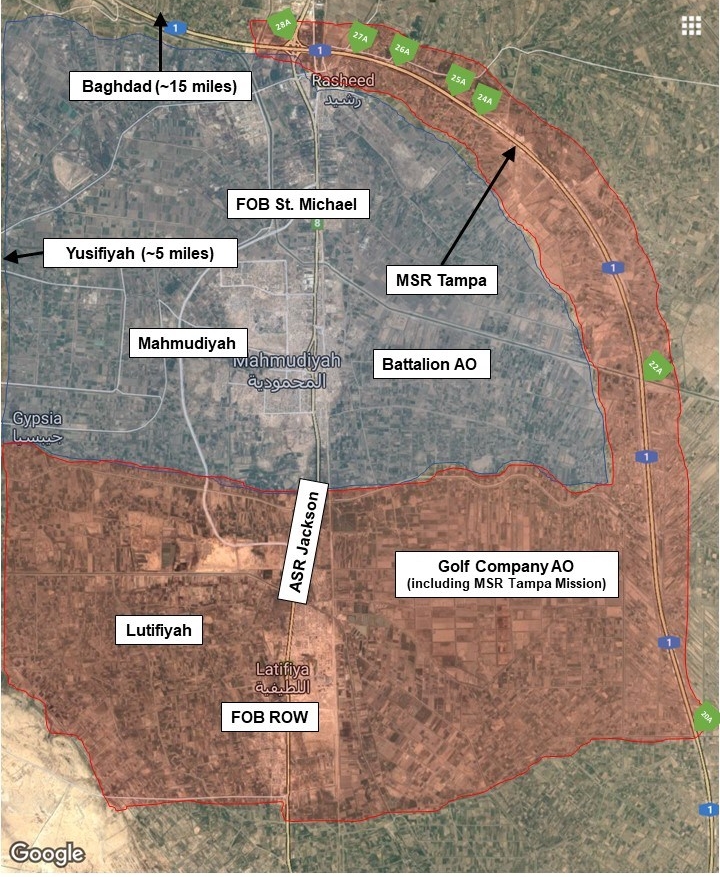
There were no easy days in Iraq for any of our Marine or Sailors, but what I tasked 3rd Platoon with challenged the limits of believability. “As a whole we had a pretty rough tour over there,” remarked Sam Wollersheim, a Lance Corporal in Murph’s squad. “We saw and endured a lot in a short time. We had some really horrible bleak days as a squad.”
Given the immense challenges, it would have been easy for the platoon to stay in a defensive posture throughout our time there. But that was not the DNA of the men who were in Golf Company. Instead, they remained perpetually on the offensive. They forged a grueling operational tempo and developed a litany of innovative tactics, techniques and procedures (TTPs) that allowed them to be wildly successful during our time there. By the time we left the country, the security level for Tampa had been increased enough to allow for it to be opened to civilian traffic. That was an unfathomable outcome just months prior.
There was a very healthy competitive spirit that existed in 3rd platoon. The platoon’s leaders, BJ Ganem, Mick Gillitzer, Brad Jackson, Andy Wentworth, Ryan “The Buddha” Baudhuin, Joe Barnes, Rob Wiltse, Eric Link, Joe Cull, Zak Konkol, Adam Schwartz, and Murph had been together in the unit for several years. They were rightfully proud of what they had built together in their platoon, and they generally took every opportunity to demonstrate the competency of the platoon they fervently believed was best in the unit.9
One of the truly special things about that group of NCOs (Noncommissioned Officers) was they understood they were not competing against each other, but against how good they could be, individually and collectively. Jackson, one of the squad leaders, described Murphy’s impact: “We were brothers in arms in the ultimate game of tag, and we fought with ferocity. Murphy pushed me to be the best I could be, always keeping this old man on his toes.”
But much more important than the approach and tactics employed was the culture of confidence the platoon leaders created. And Murph led the way. Jackson continued, “I know without a doubt I could charge the enemy knowing it would cause my death and that Murphy, without hesitation, would take my side.” Knowing that your brothers would back your play, no matter the consequence, is a mental force multiplier in combat that cannot be appreciated enough.
In late November, Murphy’s squad was embroiled in what would be one of the fiercest firefights of their deployment. “On the west side of MSR Tampa, one of the patrols had taken fire the night before,” Murph remembered. “We wanted to go out there and investigate a couple of the houses in the area.” While searching the homes, they found significantly more weapons than were allowed by law, as well as other weaponry materials that cast a very suspicious light on their occupants. The squad took three military-aged males (MAMs) into custody and loaded them in the back of Murph’s vehicle to transport back to the platoon command post for further questioning.
As they prepared to roll out, a contractor convoy traveling on Tampa came under extensive fire from the east side of the highway. The contractors pressed on through the ambush and left the area swiftly. Alerted by the intensity of the gunfire, the 3rd Platoon squad hastened to trace its origin. Insurgents, deeply entrenched in a village on the opposite side of the highway, unleashed a barrage of fire on the squad. “We took machine gun fire and mortars. They quickly bracketed us10, I remember,” said Murphy.
Unless the enemy mortars were swiftly neutralized, the squad’s chances of surviving the encounter would be significantly reduced. Murphy vividly recalled the subsequent events. “Cantafio was the .50 cal gunner on the first vehicle, and he was able to eliminate the mortar team once we got established,11 he said. Meanwhile, as Murphy’s HMMWV advanced towards the machine gun fire, it began to decelerate, eventually grinding to a complete standstill on the highway.
Sergeant Jackson was driving the vehicle, and Murph was sitting in the passenger seat. The three Iraqis remained in the back of the vehicle, along with Craig Goldsmith and Sam Wollersheim. Trying to be heard over the gunfire, Murph screamed at Jackson, bewildered as to why he would decide to halt the vehicle in the middle of the ambush kill zone. Goldsmith and Wollersheim returned fire towards the village.
The reason why the vehicle was not moving soon became apparent. “Our vehicle took so many rounds. It was shot up and was leaking all kinds of fluids,” said Murphy. “Our vehicle was dead; Jackson hadn’t decided to stop. We laughed hard about that later on.”
Everyone quickly dismounted the vehicle and moved to a berm on the east side of MSR Tampa, which provided clear firing lanes towards the insurgents. “We could see guys shooting from the village and a couple of vehicles that fled from the backside of the village,” remembered Murphy. “It was a pretty substantial gunfight. Very short but hot.” Once Cantafio had taken out the mortars, the advantage shifted to Gillitzer’s aggressively maneuvering squad. The insurgents had no good choice but to start withdrawing from the area.
Gillitzer and Murphy assessed the situation. With a downed vehicle and still in possession of the three MAMs they had taken in for questioning, they decided the right thing would be to not pursue the fleeing enemy force. Instead, they moved the squad back to CP 22A.
Gillitzer was astounded by Murphy’s actions during that ambush. “While under fire, he was able to get his team across a pipe spanning a flooded canal, advance, engage a hostile vehicle, and hold his position.”
This incident exemplified Murphy’s daily performance in the chaotic combat zone. Yet, it was not merely his competence, bravery, and ultimate loyalty that defined his impact on those around him. Sam Wollersheim recalls, “The thing I remember about Murph is he always had a smile on his face. He portrayed confidence, compassion, and a true feeling that he cared about us. For a young Marine in a combat zone to have a leader to look up to like Murph was a morale booster and a feeling of calm.
Andy Wentworth provided a matching portrayal of Murphy’s leadership impact. “Think of construction guys working their assess off on a jobsite yet having a great time doing it. Talking smart and giving each other shit. That was the vibe,” explained Wentworth. “He’d suck up a lot and power through shitty situations with a smirk, always look out for his guys, and they knew that he cared for them deeply.”
Adam Schwartz, who was another team leader in the same squad as Murph, stood in awe of not just the combat leader he was during their time serving together, but also his character as a person. “He was one hell of a Marine when it came to tactics, knowledge, ability, and leadership, but when not in uniform he was also the guy who would give a stranger the shirt off his back and was humble about it,” Schwartz mused. “You don’t often find all those qualities in one man.”
Mick Gillitzer valued everything that Murphy contributed to the squad, particularly his reassuring routines. “Whenever 1st Squad was departing friendly lines, as an integral part of the sequence, Keegan and Eric (Link) would always recite the Boondock Saints or 13th Warrior prayer over the PRR12 as the final item before bomb bursting out,” Gillitzer recalled. “Initially amplifying the final moment of relative security, many of the Marines in the squad considered it good luck and a way emotionally to be prepared to step off.”
While Golf Company was deployed, it was clear to Murph’s friends that he was deeply committed to his relationship with Alissa. “Keegan and I kept in touch via mail throughout his time in Iraq and he was very candid about how he felt about Alissa and his situation,” said Abe Searl. “The context of those letters will remain between him and I, but I can tell you that meeting her gave him something as equal to freedom that was worth fighting for.”
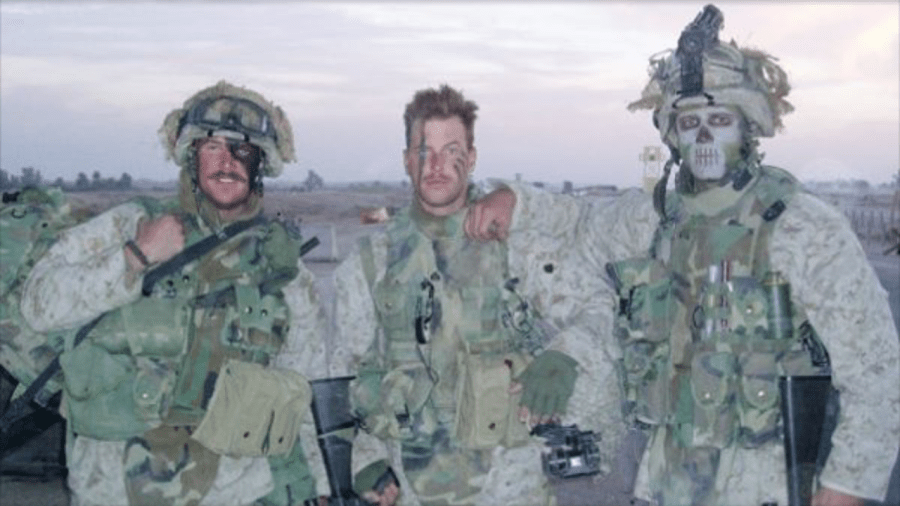
One of my most vivid memories in Iraq occurred on MSR Tampa with 3rd Platoon. In early January, the Coalition Force Leadership and the Iraqi Authority strategically decided to open MSR Tampa to limited civilian traffic, a move fraught with significant risks given the highway’s vital role in logistical support.
Amidst preparations for this, I traveled from the FOB in Lutifiyah to our guys’ positions on Tampa. For days, the combat engineers had worked tirelessly, fortifying our positions along the highway to provide robust blast protection against potential insurgent attacks. Upon my arrival, I conducted a thorough inspection of the fortifications and then attended a detailed briefing by the leaders of the 3rd Platoon on their concept of operations for the highway’s reopening.
On one specific part of the plan, I expressed some level of doubt on the certainty of success. That’s when one of the Marines attending the brief looked at me and said, “But sir, we have Murph.” I was rocked, in a good way, by this statement. The assurance conveyed by those words transcended their simple form, reflecting a deeper sentiment that our guys shared about this exceptional Marine.
To the Marines and sailors who served with him, Murph was Superman.13
When our deployment in Iraq concluded and we returned to the States, approximately 4,000 family members, friends, and others came out to welcome us home in Madison. For many of us, it was one of the most memorable days of our lives. The joy of reuniting with my family was everything I had anticipated. However, I also felt a profound responsibility that day. I was determined to communicate with anyone and everyone who would listen to me about the significant achievements of our boys in that far-off land. If possible, I would have detailed the heroic actions of each Marine and Corpsman. And I could have spent a whole day talking about Murph.
The 3rd Platoon Guide, BJ Ganem, was a combat leader of remarkable savvy and the very soul of the platoon. His innate ability to draw the best from his team stemmed from his deep belief in each member. He was effusive in his praise for his friend. “Murphy is exactly what you would want a US Marine Infantryman to be,” Ganem stated. “He could have easily been in any of the Special Operations Teams if he wanted to be in that he could pass all the physical fitness, swimming, mindset, and knowledge testing, but he also possesses a level of humility and discipline that is uncommon in most humans with natural talent and ability.”
Murph’s consistency was absolute. He took no days off and held to the highest standards throughout his entire time in service. “His commitment to the Marines and to his fellow service members never wavered as long as I knew him,” said Adam Schwartz. “He was locked on and squared away as much as the last day I served with him as he was the first day I met him.”
Was it Worth it?
“I believe we fulfilled the mission of rooting out evil.” This was the crux of the response Murph gave when I asked him if he felt that his service made a difference. Closely related is the even deeper question, ‘Was it worth it?’ Over the years, this has been asked by hundreds of thousands of people, service members and civilians alike, when reflecting on our time in Iraq.
As expected from Murph, his answer was thoughtful, deliberate, and comprehensive. “The consequences and ripple effects of war are just never-ending,” he explained. “You consider the PTSD that afflicts some guys and the extent of their suffering. You think about the traumatic brain injuries, the physical injuries, the mental fatigue, and the tremendous drain and strain all this places on an individual. Then you extrapolate that to affect a marriage, a spouse, a significant other, and then children and everything else.”
The burden our deployment placed on the Golf Company community was substantial and has compounded over the years. Our Marines, Sailors, and their families excel at taking care of each other, yet this cohesion cannot fully mitigate the deleterious effects of our experiences. For eight months, our guys faced impossible situations and witnessed horrors daily that many are fortunate never to encounter in their lifetimes. I believe that if given the chance to go back, each of us would choose to serve again, but that choice does not erase the scars we carry.
I don’t know the exact divorce rates within our unit after returning, but they were high. While many of our guys have since found happiness in second marriages, it’s important to acknowledge that no one enters a marriage expecting it to end prematurely. “Murph highlights a critical aspect of the decision to engage in conflicts like Iraq or Afghanistan, underscoring the profound personal and collective implications of such decisions. “The decision to go to war, especially with boots on the ground,” Murphy stated, “is something I don’t think anyone can truly understand unless their own boots were on the ground at one point.”
“There were many things that I remember from that were worth it. Did we give people a chance to have a taste of freedom and whatever that means for their culture and their lives? Yeah, I think we did,” said Murphy. “I believe we gave the Iraqi people an opportunity to have a better life than they had under Saddam’s tyrannical dictatorship. I’m not sure that Iraq is a better and more free country today than it was prior, though.”
Murph also pointed out the security environment that existed post 9/11. “At that point in time, we had the worst attack on our homeland since Pearl Harbor,” said Murphy. And he believes that often there is only one thing that bullies respect. “The only currency that’s understood across the world, especially with terrorists who don’t even see borders, is strength,”
I believe each person is fully entitled to their own answer to this question. It is a complex topic, and I don’t believe there is either a simple or right answer to this. This is a subject I have wrestled with in my head for the last two decades. I have resisted sharing my full thoughts broadly, instead limiting what I have said to small groups of people I served with.
Veterans who served in Iraq seem to be firmly in the camp of ‘it was not worth it’ when answering this question. A 2019 Pew Research Center survey of Veterans indicated that 64% of them feel “the war in Iraq was not worth fighting considering the costs versus the benefits to the United States.”15
My short answer to the question is that it was absolutely worth it, but as with any complex subject, I think it is important to understand my long answer to fully contemplate the ‘why’ I believe that which I do. I am not sure if I have wavered on my answer over time, but there is no doubt that certain components of the answer have weighed on me heavier at different points over the years.
When I decided to get back in the Marine Corps and became part of Golf Company in 2003, a near total crisis of conscience seized me. Many of my brothers and sisters from the Naval Academy and the Marine Corps were serving in Afghanistan or Iraq or were actively preparing to deploy to one of those combat theaters soon.
I, on the other hand, was working at a bank in Chicago.
It didn’t seem fair, and I certainly believed I had not done enough yet for a country and a Marine Corps that had given me so many opportunities in my life. I also believed, and still do, that on the other side of the unexpected attack that 9/11 represented, we had to reset the relationship we had with the rest of the world in terms of our resolve. Said differently, if we didn’t become much more proactive rooting out and dealing with terrorism proactively and outside of our country, we would continue to see terrorism and death mounting inside of our country.
Through everything that turned out to be true, and not true about going to Iraq, this is a world view I still subscribe to. I know there are others who fundamentally disagree with this, and I respect their point of view. In the intricate realm of world geopolitics, no simple algorithm exists that can reliably predict outcomes in every situation. There is a complexity that doesn’t line up nicely with the black and white views that people increasingly carry. I resist those who speak about these things in the absolutism of the insecure and uneducated.
As has been well documented for history, the primary justification for the war in Iraq was based on intelligence suggesting that Iraq was actively producing weapons of mass destruction. However, when no such weapons were discovered following the 2003 invasion by coalition forces, the narrative shifted. The focus for the justification then became helping the Iraqi people establish a democracy, marking a significant pivot in the rationale for our presence there.
Frankly, this pivot in justification disappointed me. I understand the political expediency behind the decision, but I believe it’s parochial and presumptuous to assume a nation can dictate the societal structure that people in sovereign nations desire. Opening this specific Pandora’s box, a tactic we have utilized a few times throughout our history, may not bode well for our long-term standing in the global order of nations. I might be wrong.
What often lacks sufficient consideration is the context of what was known when we decided to invade Iraq. At that time, we didn’t have the benefit of the 20/20 hindsight we possess today, which reveals a series of grave misjudgments and scenarios that weren’t adequately anticipated. The decision to engage in Iraq as part of the Global War on Terror was made amid fears of terrorism potentially escalating within our own borders to devastating effect. Given the information available then, I believe the initial decision was the right one. Again, I might be wrong.
Like almost everyone who has served in a combat zone, when we got to Iraq, my perspective changed from having thoughts about why we were there to only two things mattering: achieving our mission and being there for the person to my right and left. That’s it – that’s all there was. I was lucky that I served with the best; there was no question that if the task could be accomplished, it would be our guys who would figure out how.
Losing our brothers has always provided me the biggest doubt in my ‘was it worth it?’ answer. I realized long ago that I will never reconcile their deaths. I would never be able to look at any of the family members of our fallen warriors and say, ‘it was worth it,’ knowing what it cost their loved one. I will never have a bigger failure in my life than not bringing those boys home alive.
The deaths of our fallen warriors cast a long shadow over Murph, as it did over the entire Golf Company family. Their sacrifices serve as a continual reminder of the profound personal costs of war. “For years after coming back from Iraq, I know Keegan used to wake up in the middle of the night and watch Bobby Warns’ tribute video,” said Andy Wentworth. “Alissa told me once she’d found him in tears one night at the computer at 3am.”
The question ‘was it worth it?’ is an incredibly complex one that deserves a thorough examination and multiple points of view. I appreciate how Murph answered the question and the hundreds of others who we have served with who have contemplated the topic and have come to their own conclusions.

When I asked Murph about the current significance of his military service, his response was deeply reflective and imbued with a sense of pride and responsibility. ”I am proud of my service to our country, and I believe those around me are very proud of me as well,” he said. “There is a sense of entitlement that permeates throughout our society today. I want to show and teach my children that service, work ethic, and determination are extremely important not only to be good human beings, but in order for our society to continue as we know it.”
The concept of service is inherently noble, yet its necessity is grounded in practicality. Without dedicated military service members, our freedoms could be compromised. Without committed law enforcement officers, firefighters, and other first responders, our communities would be less safe. Without skilled healthcare professionals, we would be ill-equipped to meet the health challenges that face our communities. Without exceptional teachers, our children would lack critical thinking skills. Without proficient tradespeople, the infrastructure of our country would deteriorate. Each of these professions, and so many more, is crucial in preserving the freedoms, standing, and quality of life we cherish today.
At the core is freedom, though, and Murph is very interested in ensuring that every generation will have the best military in the world to continue to secure our freedoms. “Our country doesn’t just exist as it is today out of nowhere. Everything you see, the freedoms we have, the opportunities we have all came through sacrifice,” he said. “Generation after generation of Americans have raised their hands to defend this idea of the United States of America, in order to give us as individuals the opportunity to do what we want, how we want, where we want, and with whom we want. That doesn’t just happen. People have to knowingly say ‘yep, I’ll go.”
Andrew Hitt, who became friends with Keegan through their children, shared insight into how Murph views his service. “Keegan is selfless. He still fondly talks about the people he served with, recollects the good, the bad, and the ugly stories of serving,” explained Hitt. “But if he had to do it all over again, he would do it. He served because he was called and no matter what happened or happens, he would still serve.”
One day, Murph sent me a quote from President George H.W. Bush, spoken in 1991, that I believe perfectly captures both the inspirational and practical aspects of service. “Let future generations understand the burdens and blessings of freedom. Let them say we stood where duty required us to stand.” This quote succinctly expresses the deep commitment to duty that defines true service.
A Servant Serves
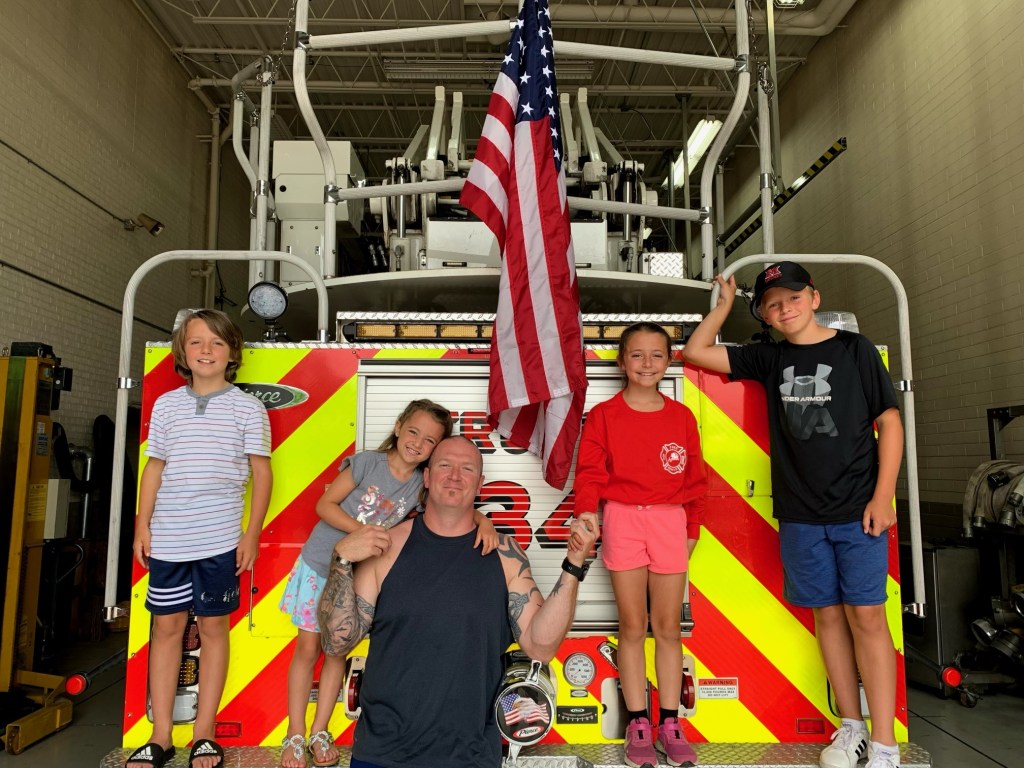
Upon getting back home, the first permanent job that Murph got was as a firefighter. The initial downside was it would be far from home, near Boulder, Colorado. His second career turned out to be as successful, if not more, as his first.
Keegan and Alissa moved to Colorado, where there were more opportunities to get on with fire departments in locations they wanted to live. One weekend in 2008, they went to stay in a hotel in the mountains. While there, they took a Gondola lift to the top of the mountain. Amid the breathtaking mountain scenery, Murph, following his carefully laid plan, gently took Alissa’s hand and urged her to look his way.
“I knew right then what was about to happen because his hands were shaking and he was so nervous – he never gets nervous,” laughed Alissa. “He asked me to marry him and of course I said yes. My first thought was ‘Finally!”
“I knew I wanted to marry Keegan literally from the first moment we met,” continued Alissa. “We got to the top of the mountain, and we called everybody to tell them the great news.” As a funny aside, when Alissa told her sister, she asked where they were staying. When Alissa told her it was the Hotel Colorado, her sister replied that she had seen that hotel on the television show Ghost Hunters. Turns out that Keegan and Alissa were staying at one of the most haunted hotels around!


Love Since Day One
Murph had joined the Mountain View Fire Rescue in 2007. He was paired up with Bill Schmanski, who would oversee his paramedic field training. Schmanski was frustrated that he had been assigned yet another person joining the department with no prior experience as an EMT. “These candidates typically make notoriously poor paramedics,” he explained.
However, Schmanski could see from the beginning that he might be in for a different onboarding than the normal new hire to the department. “There was something way, way different about Murph,” he said. Keegan’s lack of experience was evident from the start, but he overcame what he didn’t yet know with strict accountability for self-improvement.
Eager to bridge the gaps in his training, Murph actively sought feedback, relentlessly pursued additional knowledge, and consistently worked on enhancing his skills through classes and practical experiences. This included self-study, taking classes on his own time and with his own money and getting a part-time job working with the department’s physician advisor as a paramedic tech in the emergency room.
In short order, Murph became an autonomous member of the team. His trainer was astounded. “My measure of good medicine is whether you are accountable for your practice and whether you work to direct your own improvement on a call-to-call basis,” said Schmanski. “According to my measure, Murph is the best paramedic I have ever worked with.”
Beyond just doing his job well, Keegan also reciprocated, providing his field trainer with the grateful feeling one gets when they know what they have done is rewarding. “It was humbling to be a part of. I was very burned out in public safety when I got assigned to train Murph,” said Schmanski. “Him coming along and doing things how he did probably saved my public safety career. He helped me with my perspective and made me a better person.”
Jeff Powley, a retired firefighter from Mountain View Fire Rescue, was on the department when Murphy joined and was in awe of just how good he was. “First and foremost, Keegan is a warrior in every sense of the word,” Powley remembered. “But that definition pales when it comes to him. Add words like determined, committed, powerful, realistic, capable, and enduring to that definition and it would be a better fit.”
These were all fitting words for a person of such consistent accomplishment. But what truly set Murph apart from other high achievers was his commitment to excellence, free from any trace of ego—no false pride, no tough-guy façade. Just genuine humility.
“When you are a man that represents such things, it is possible that that person might be difficult to be around or have an undesirable ego.” Powley described. “But not Keegan. He does present as a giant of a man, but he does it almost silently. I never once saw him be anything less than respectful and accommodating to everyone.”
No one should confuse lack of ego with absence of edge, though. Powley recounted a story where the shift had just completed their training. “And of course, there is always one jackass who frankly should have never been allowed to be there lipping off and trying to create trouble,” explained Powley. So many altercations that could end up in physical conflicts start with much ‘peacocking’ and most never get past that phase.
Not with Murph. “I remember Keegan reaching over without even looking at or saying anything to this asshat and squeezing him by the back of the neck bringing him to his knees,” chuckled Powley. “Keegan never even missed a beat in the conversation he was having with me. I smiled inside.”
In 2011, Murph secured a spot on the La Crosse, Wisconsin Fire Department and then two years later was hired by Appleton. Both he and Alissa were excited and grateful to have the opportunity to move back to their home state. Keegan explained that he really appreciated his time in La Crosse, and he was on the force with several guys he had been in fire schooling with, but that “we just needed to get closer to our family.” La Crosse was about a three-hour drive from Fond du Lac; Appleton was much closer to where both sides of their family lived.
Steve Jahr was in the same recruit class for the Appleton Fire Department. “Every morning would start with PT (physical training). Most days we would be in full gear, on air, and perform a circuit of fireground tasks at a heavy pace,” said Jahr. “We set the pace, and we always pushed each other to go harder and faster because at this point, we still didn’t really know each other and felt as if we were competing against each other.” Jahr had recently finished a successful stint as a medic in the Army National Guard, and a natural intra service rivalry between him and Murph existed.
During school, Murph developed severe pneumonia. The training battalion chief told him he could take it easy during morning PT, even sit out if he wanted to. But as Jahr recounted, Murph would have nothing to do with that, and his illness sparked him to push harder. “The more he suffered during PT, the more I would give him a hard time about it. ‘Just give up old man, it’s ok, you can quit, that’s what Chesty14 would do’ I would say,” recounted Jahr. “He would just laugh and push even harder. No doubt he would then slide in a comment about how Marines work harder than Army.” Yes Steve, they do.
Eric Holdorf is a Lieutenant on the Appleton Police Department and served with Murph on the SWAT team. Like others around him, Holdorf valued Murph’s tactical acumen and his incessant ability to accomplish things under the harshest environments. But even greater than that, he treasured how his co-worker treated those around him. “Inside Murphy’s tribe, he’s one of the best conversationalists I ever met,” Holdorf asserted.
As is the case when around people of strong opinions, not all discussions were light. “We’ve had some knock-down debates and have vehemently disagreed with each other,” said Holdorf. “But it’s never gotten personal. It’s never gotten angry. He ends most of our conversations with, ‘Alright buddy, I gotta jet. Be good.’ followed with ‘Love you, homie.”
Holdorf especially appreciates how Murph treats those he is around. “When he sees my wife, even if he’s in the middle of a sentence with me and she’s walking past, he’ll give her a genuine hug and a legitimate smile. His love for his brothers extends to the ones his brothers love.”
Murph’s deep care for his co-workers remained at the same level as we saw from him in the Marine Corps. “In May of 2019, I was working at the incident where one of my crew members was shot and killed,” recounts Steven Unruh who was the officer on the crew that day. “Keegan met me at the hospital within the hour of the incident, stayed with me throughout the evening and eventually took me home.”
The tragic death of Engineer Mitch Lundgaard dealt a devastating blow not only to the Appleton Fire Department but also to the entire community, leaving an indelible feeling of sorrow. During what began as a routine medical call in downtown Appleton, a harrowing turn of events unfolded as Unruh’s crew faced targeted gunfire from a patient they had just rescued from a drug overdose. Heartbreakingly, the gunfire killed Lundgaard during this unfathomable incident. Mitch was not only a beloved firefighter, but a husband, and father of three young boys. Mitch died at the young age of 36 years old.
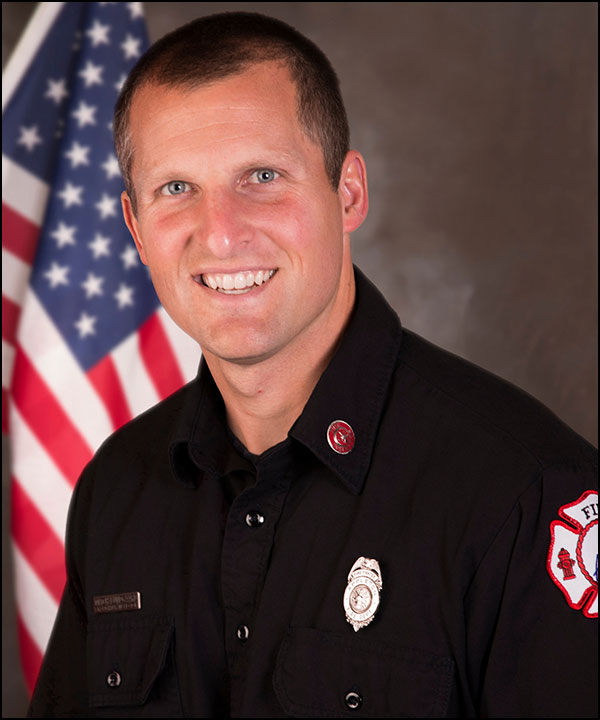
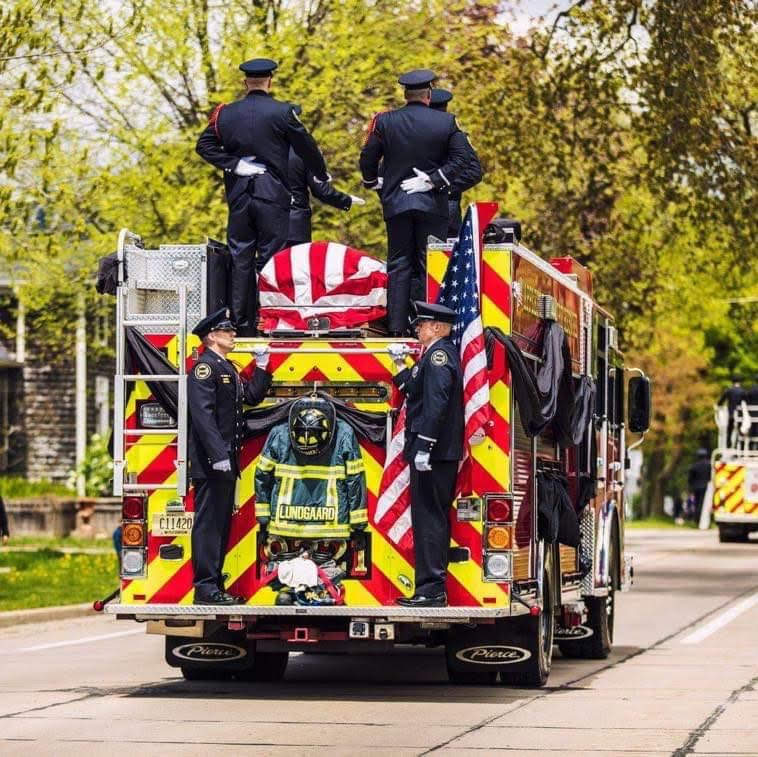
“As you can imagine, this was a huge blow,” said Murphy. “It had an even larger impact in our house because this happened on Alissa’s birthday. This year will be the five-year anniversary of Mitch’s tragic line of duty death.”
When a leader loses one of the people under his command, it is easy slip into a very bad place mentally. Having someone who cares about you and understands exactly what you are going through is paramount. “We see and experience a lot of awful things that happen to people and you only really understand the impact it has if you’ve been through it,” said Unruh.
Murph’s ongoing interfaces with his friend helped tremendously. “He continued to check in, opened up to me about counseling and how important it was, and during a stretch where I was in a pretty dark place, he was there to make sure my thoughts didn’t get away from me,” remembers Unruh, thankfully. “He was also relentlessly persistent with the fire department’s management on what my return to duty would look like and also with the policy changes that would follow the incident.”
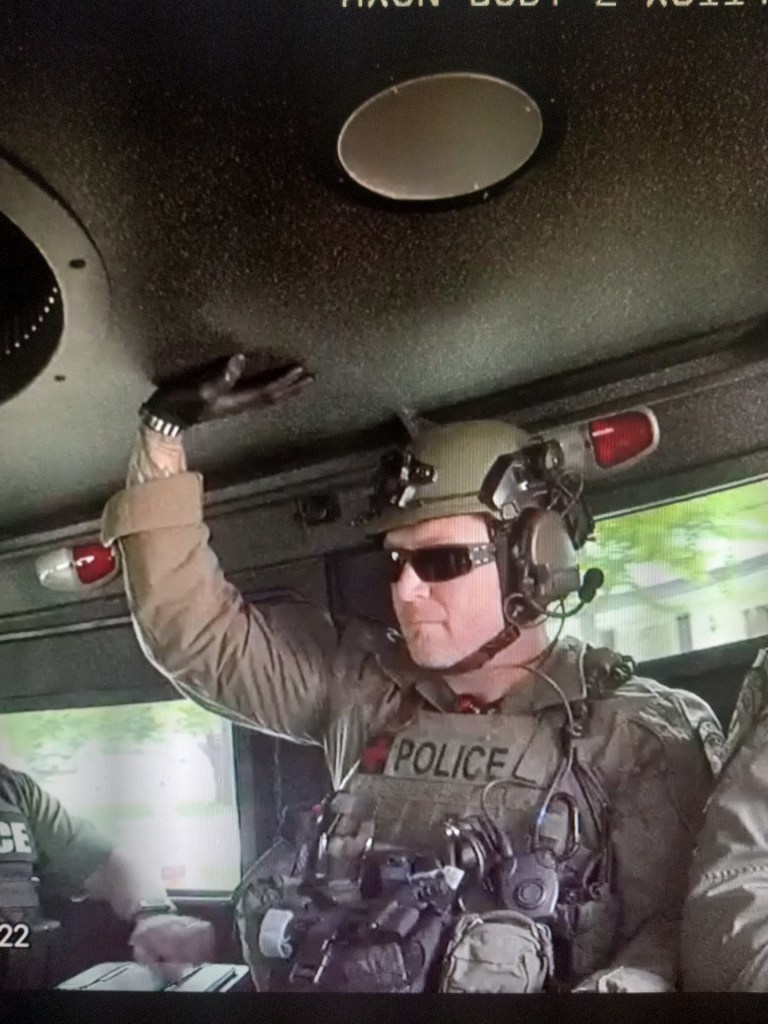
A few years into his stint in Appleton, Murph was selected to join the city’s SWAT Team as a Tactical Emergency Medical Services (TEMS) medic. On one operation, the SWAT Team was tasked with serving warrants on cartel drug houses in the area. “These were some legitimate bad dudes,” remembers Steve Jahr, who was a medic attached to the SWAT unit, just like Murphy.
Both of the medics were assigned to the same operational location. “Keegan and I were the medics on the main target house which was known to have over a dozen guns inside,” recounted Jahr.
While executing the search warrant on the home, it was discovered there was a detached garage that seemed to be without any type of standard door to enter. The only option was to find another way into the structure that needed to be secured to accomplish the mission.
The unit decided to use a circular saw to cut through the aluminum garage door. Murphy immediately volunteered to be the one to do it, and in doing so exposed himself to a potentially huge threat. “The only way to saw through the door would be to expose himself to whatever was on the other side,” said Jahr. “To put this into perspective, if any of the cartel members on the inside of the garage wanted to have a shootout, Keegan using a large saw on the other side would be an easy target.”
Ryan Neff, who was on that team as well, agreed with the threat assessment. “He did this while we tried to provide cover, but as you can imagine there was a lot of danger that he stepped in front of to complete the mission,” said Neff.
These moments of intense danger and friction were made for Murph. Jahr remembered that, “Keegan never hesitated.” Murph called a fire rig to the scene and grabbed the K12 gas medal cutting saw and sliced a large V in the door and then kicked the middle down.
The fact that Murphy would in the moment and unhesitatingly make the decision to do what he did was one thing. But how he did it was what struck those around him. “Quite honestly, Keegan loved to conduct any form of forcible entry,’ said Jahr. “And he did so with a smile ear to ear. This case was no exception.”
Murphy’s colleagues often highlight not just his operational prowess, but the servant-leader mindset he consistently brought to even the most perilous situations. “He would rather him be the one exposing himself rather than any of his fellow SWAT operators,” said Jahr with admiration. “That’s just the kind of guy he is. He truly loves those he serves alongside and would never want to see harm come to them.”

Brotherhood
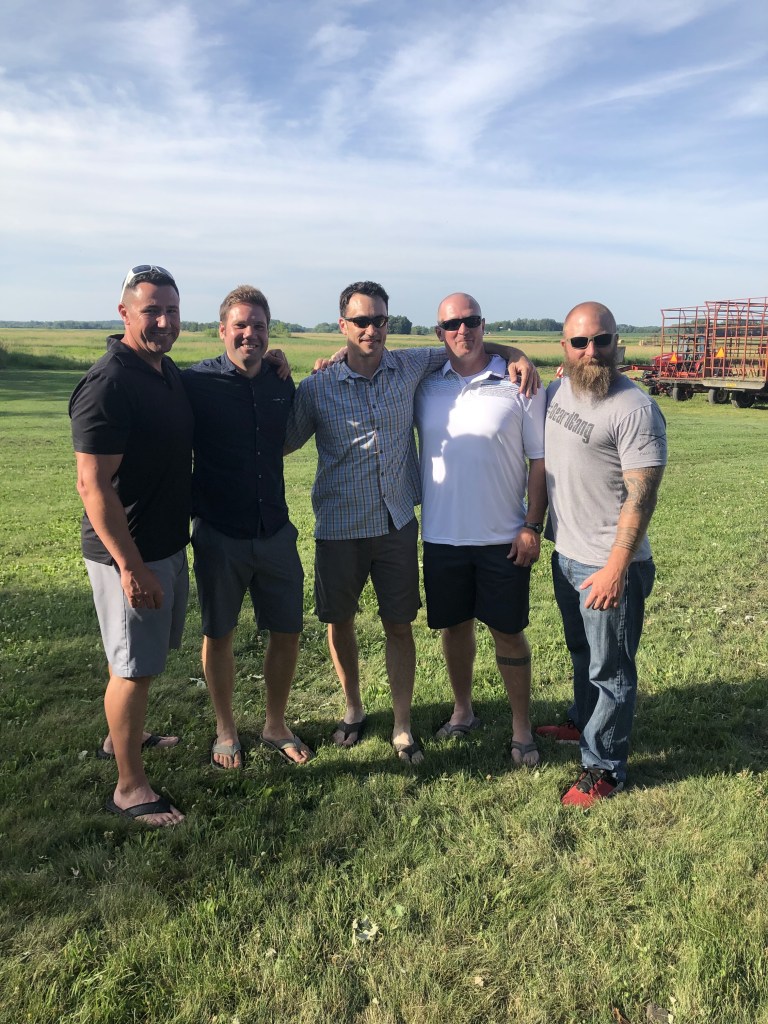
During their college years, Murph and Abe Searl chose to cement their bond through matching tattoos inked on the inside of their left forearms. The word ‘Braarys’—meaning ‘brotherhood’ in Manx Gaelic—symbolizes the deep connection they felt, rooted in shared values and experiences. Searl was not part of the military, but he was grateful for the Marine brothers Murph had. “The caliber of men that Keegan served with exemplifies everything about the idea I have in my head about what our American military stands for,” said Searl. “This makes me feel an immense sense of pride to be able to say I know men like this.”
Searl also appreciated the relationship he himself established with the Marines. “All those boys treated and still treat me like a brother, which I’ve always cherished and respected. I have the ability to reach out to any one of them if there is anything my family or I ever need, and they know they will get the same in return. This isn’t something that anyone should ever take for granted.”
A visceral need to continue to serve defines many of those who volunteer for the armed forces. What is often hard, though, is to determine where to focus their passion after getting out of the military. Murph has a life history of searching out good people to serve with and will go to incredible lengths to help them. “I used to say that when I was leading Keegan as team leader for our local SWAT Street Crimes unit, ‘I am so glad Keegan trusts me and is on my side,” said Adam Paiser, who served with Murph on the Appleton department. “I would say this because if he believes in you and trusts you in what your intentions are for him and anyone he cared about, then he would literally fight and die for your cause and not his.”
Like others, Murph held a strong urge to get back to the deployed military experience he had. It is a complicated set of feelings that accompany such a desire, but I have found it generally starts with one thing. “I wish I had done more. More time overseas, more deployments, more missions, more sacrifice,” said Murph. In the Preface to this book, I recounted the story of Medal of Honor recipient Leroy Petry, who deployed to Afghanistan for an eighth combat deployment, after losing his right hand in a firefight that was the impetus for his MOH award.
Petry, when asked why he went back for an eighth deployment, told me, “I just didn’t feel like I had done enough yet.” If he hadn’t done enough, then who has? The sentiment of ‘not doing enough’ runs deep in people of service. Keegan remembers the time after getting back from deployment. “I was ready to get out, but at the same time I regretted getting out. Several of my closest friends from Golf ended up back overseas, and I took that very hard for several years.”
A number of our guys from Golf Company stayed in the Marine Corps and deployed either with the company again or volunteered to join other units that they knew were deploying, and others joined security contractor forces for multiple years after as well. “Several times I almost re-enlisted to get back in,” shared Murphy. “During paramedic school in 2006, I went all the way through the re-enlistment process for Air Force pararescue. All I needed to do was sign the dotted line again. I ultimately did not because Alissa and I had already been together for about three years, and I couldn’t ask her to be part of the active-duty war deployment lifestyle.”
Alissa could see the impact that others being overseas without him had on Murph. “The other part I think Keegan struggled with was watching some of the guys going back over to Iraq for a second tour without him,” remembered Alissa, “The guys created such a brotherhood that they just wanted to keep together safe. Some guys leaving without him made Keegan anxious.” Once a protector, always a protector.
The firefighters he served with could tell what Murphy’s military service meant to him. “It was evident that he was proud of his service,” said Steve Unruh. ”He spoke about making the decision not to stay in the Marines. And while he was proud to be a firefighter and be back in Wisconsin, I could tell that he also wondered what could have been.”
It was also clear to those around him what kept him from making the decision to go back in. Unruh continues: “He loved the Marines, but he loved Alissa more. By the time I was getting to know him, he had three kids. His family meant everything to him.”
William Lynch has been a good friend of Murph’s since their time together at UW-La Crosse. “Something I will never forget and will always hold close to the chest is Keegan’s actions while my father was battling cancer.” Lynch’s father, who had also served in the Marine Corps, has been diagnosed with cancer. He thought he had beat it, only to see it come back again with ferocious intensity. “Keegan would reach out to my father now and then to check on him and to swap stories about the military and being Irish. More importantly, Keegan would always answer calls from my father.
“After they would speak, my father would call me to brag about their conversation and I could tell in his voice, the phone call with Keegan. My father referred to Keegan as Shamus, and the calls made his day. Hell, probably his month!” As Lynch fondly recalled these deeply personal moments, it reinforced that Murph’s decision to prioritize family over returning to active duty was influenced by more than just personal ambition. He was maintaining the deep bonds he cherished, similar to those he formed with Lynch’s father.
“For the rest of my life, I will hold Keegan in the highest regard for doing that small act of kindness. And that sir, is who I believe Keegan Murphy truly is,” Lynch said, wistfully and gratefully.
The Fight of His Life
“He was the epitome of quiet professional.” Murph said this about his friend Dominic (Dom) Hall, who joined the Appleton Police Department in 2017. Hall, a native of Appleton, enlisted in the Marine Corps in 2008, where he served in one of the elite Force Recon companies and completed several deployments. After reaching the pinnacle of what the Marine Corps could offer, he joined the Ohio National Guard, aiming specifically to join the Special Forces. He achieved this goal and subsequently deployed as a Green Beret with the National Guard.
“When I met him, he had just gotten out of the National Guard.” remembered Murphy. “He was hanging it up because he was freshly married and was going to come back and serve his community.” The two of them met when Dom was selected to be a sniper on the same SWAT Team Murph was attached to. “He was super good at instruction, as a lot of the special forces guys are,” said Murphy.
In May 2021, Hall was diagnosed with pancreatic cancer. Initially, doctors believed it was stage 1, but quickly revised the diagnosis to stage 4. “That was super hard. Dom’s diagnosis racked the department.” The news sent shockwaves through the department, compounding the already heavy burdens of the COVID pandemic and the recent loss of Firefighter Mitch Lundgaard. It was a period marked by profound grief and adversity, deeply felt by all. “That was a very hard stretch there,” remembered Murphy.
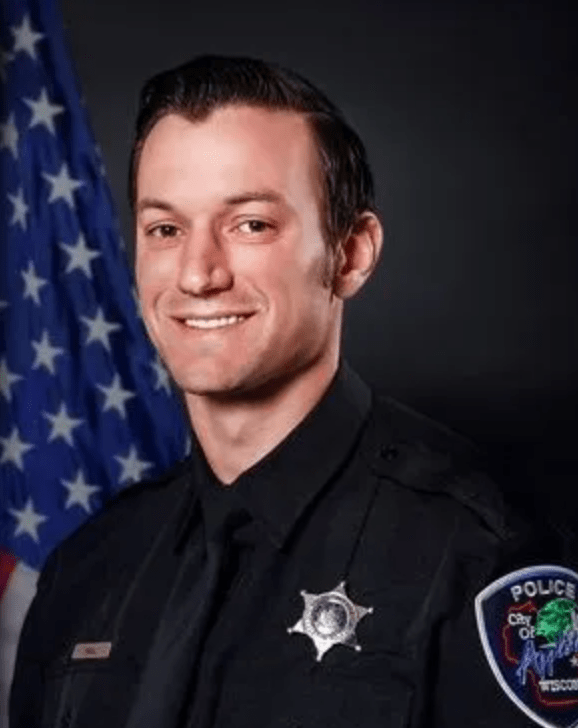
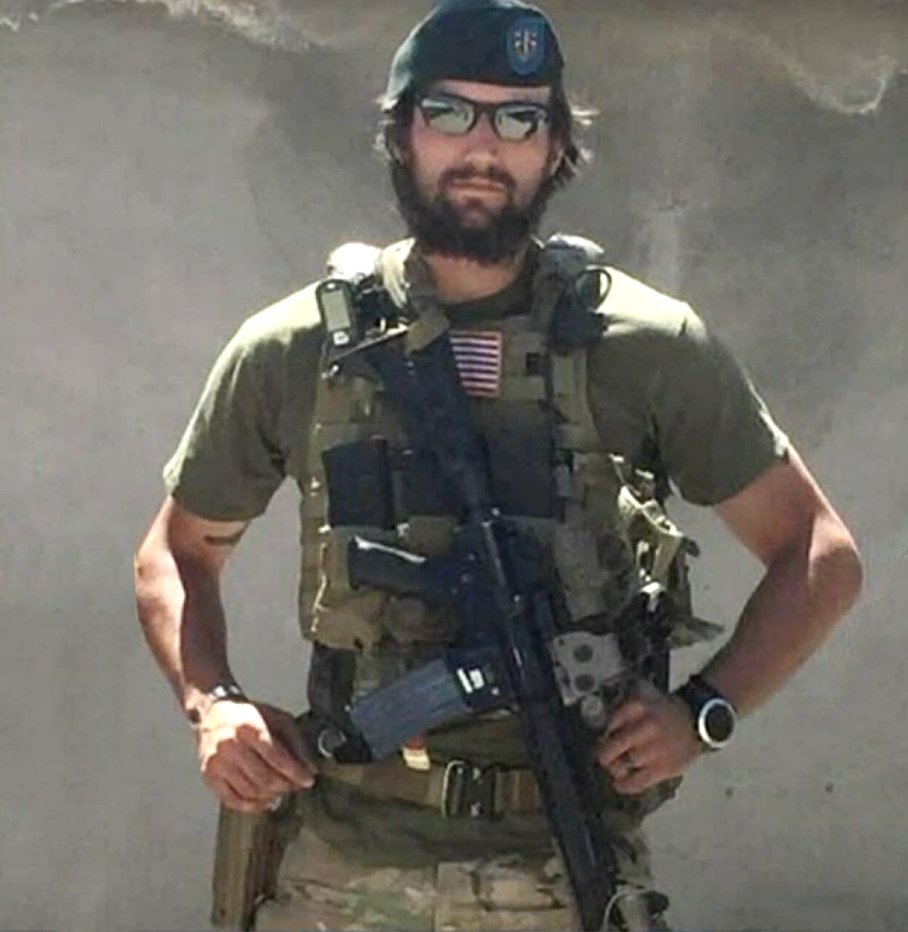
Dominic Hall – American Hero and Community Leader
Dom and Murph forged a profound friendship, rooted in their shared experiences as Marines and combat veterans. This camaraderie extended into their roles on the SWAT team, where they both served with distinction.
Upon learning of Dom’s diagnosis, Murph immediately mobilized to support his friend, embodying the unwavering dedication and care that define true fidelity. “Keegan was a regular presence with helping Jacole (Dom’s wife) with any issues with IVs or to be a sounding board for how he was responding to certain stimulus,” remembers Gary Lewis. “Keegan is one of those individuals that if you called him at 2am he would be enroute to help you with your situation.”
Murph and Alissa would take Dom’s kids in their house to free up Dom and Jacole to attend to the treatments that he would get in Milwaukee. “A ton of different people helped out wherever they could,” said Murphy.
Sadly, Hall died after a ~17-month valiant battle with his cancer. On Friday, September 9, 2022, Keegan and his family joined the Hall family and the Appleton community as Dom was laid to rest. Alissa recounted somberly, “I looked Keegan right in the eyes and said, ‘Don’t you ever make me be a widow.’
“Two weeks later we found out that Keegan had been diagnosed with stage 4 cancer.”
“The best that Alissa and I could ever figure out, I was sick sometime in February or March. I had a cough that lingered and never went away,” said Murphy.
After numerous appointments failed to pinpoint the cause, a bronchoscopy was conducted to closely examine a mass in his lungs, revealing the gravest outcome. Murph was diagnosed with stage 4 Non-Small Cell Lung Cancer (NSCLC). What began as a persistent, dry cough had escalated into the absolute nightmare scenario he now faced.
Non-Small Cell Lung Cancer is the most common type of lung cancer, accounting for approximately 85% of all lung cancer cases. Stage 4 is the most advanced form of NSCLC. At that stage, the cancer has spread to distant parts of the body, such as the liver, brain, or other organs.
The news that the cancer was stage 4 was the toughest news they would receive. Alissa remembered the moments after hearing this and how it impacted her. “I tend to be very optimistic, but that was a hard pill to swallow,” she said. “All these memories are kind of a blur to both of us because it was bad news after bad news, and we felt like we were never going to get good news. I felt like the world was ending. I was very scared and just kept thinking this isn’t real.”
Murph’s sister Kaleigh, a doctor herself, was with them at the appointment. “I was in the doctor’s room with Keegan and Alissa when he was first told that he had stage 4 lung cancer,” recounted Kaleigh. “I’ll always remember the look on Keegan’s face.”
With this news, Murph would face his most daunting battle – not one that would occur in the theater of combat, nor in the dangers of firefighting or SWAT, but within his own body. And time was not on his side. “I remember being told by two different doctors that I was behind the eight ball,” said Murphy.
What did they tell you about survival rate at the time of diagnosis? This was a question I posed to Murph as we collaborated on this chapter. Murph was clear in his response: “They didn’t and before they could, if they were going to, I had told them I didn’t want to hear anything about that.” But he did know that his cancer had been caught somewhere between stage 4 and traveling to his brain, which the variant he had (ALK) generally did very quickly.
This little part of the story fascinates me. Murph clearly understood the seriousness of the form of cancer he had. He knew it had spread outside of the organ of origin, his lungs, and had gotten into his lymph system. Yet he did not want to know the chances he had to live. No, this was a person who had carefully curated his thoughts throughout his life to ensure he would perform at optimal levels at all times. Having any prediction of how much longer he had to live served no useful purpose to him.
He would spend no time contemplating the worst outcome. He only wanted to discuss what he could do. “I want to be as aggressive as possible in treating this,” Murphy remembered saying to the doctors. “I wanted to try everything I possibly could, as fast as I possibly could. And I wanted to throw everything I could at it.”
Frighteningly, a diagnosis of stage 4 Non-Small Cell Lung Cancer (NSCLC) often equates to a death sentence. The five-year survival rate, which indicates the percentage of people who live at least five years after the diagnosis, ranges from 1% to 10% for this advanced stage. Although there have been significant advancements in treatment over recent years, the prognosis remains daunting for the vast majority of those diagnosed.
Distress rippled through Murph’s circle of friends upon hearing his diagnosis. “Keegan texted me to see if he could come over to talk,” remembered Steven Unruh. “We had lost out on a bid a few years back to purchase a storage property and when I got this message, the first thing I thought of was we were going to have another opportunity to get something going together.” When Murph shared his lung cancer diagnosis, Unruh reeled. But then he immediately volunteered to take care of anything at work to ensure his good friend could focus on his battle. “I took on the logistics of his work status, and Keegan, with his relentless persistence, took on the task of kicking cancer’s ass.”
The news spread quickly. “When Keegan was first diagnosed, it hit us all like a ton of bricks. Stage 4 lung cancer – it was unfathomable,” shares Ryan Neff, reflecting the community’s disbelief. It was not just a medical diagnosis; it represented a complex challenge that tests every part of a person’s physical, emotional, and spiritual resolve.
The Golf Company family entered into a state of collective shock. I remember getting the first call, either from Ganem or Wentworth; my memory is hazy on this specific detail. I had just got home from work and was pacing back and forth on my driveway as I absorbed the news. In the days following the diagnosis, our unit was abuzz with urgent calls and texts, each conversation driven by a singular, desperate question: What can we do to help? This rallying cry was a testament to the deep bonds and enduring support that define the Golf Company family. There are so many things I have been proud of our guys over the last two decades – foremost among them is how they always take care of one another.
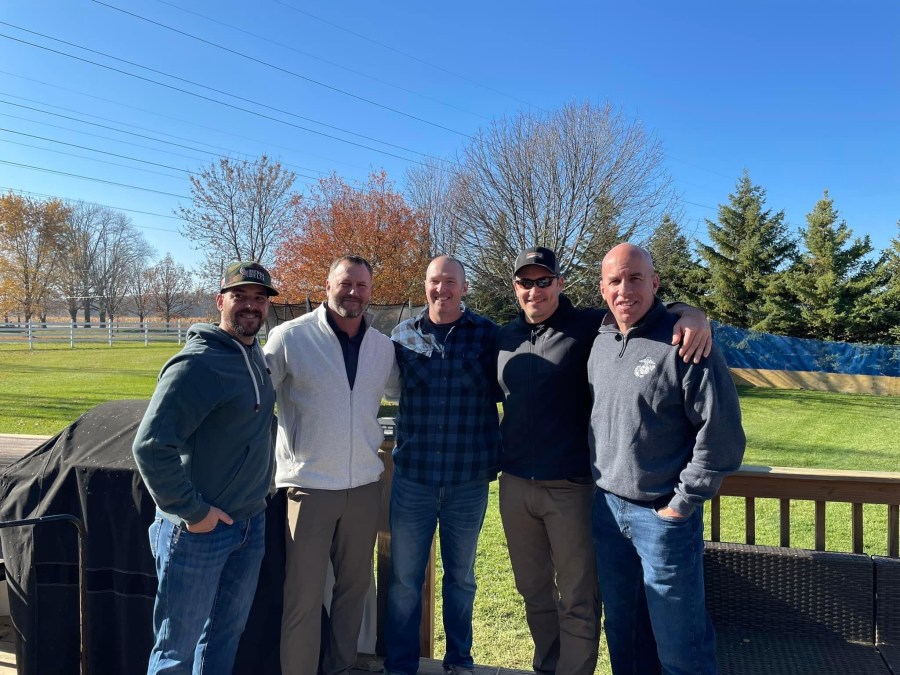
The community’s overwhelming response to Murph’s diagnosis was a testament to their unwavering faith in him. Witnessing his resolve, they believed fervently in his ability to face this formidable challenge. Steve Unruh witnessed Murph’s relentless spirit firsthand: “Once he makes up his mind about something or decides to commit himself to someone or something, you have a better chance of moving a mountain than changing his mind. And on his way to accomplishing whatever it is he is doing, he will likely move the mountain out of his way.”
Throughout his life, Murph had always faced challenges head-on, and his battle with cancer was no exception. “The impediment to action advances action. What stands in the way becomes the way,” he would recite, channeling Marcus Aurelius, as remembered by Ryan Baudhuin. Embarking on his journey to defy the odds, Murph drew upon all his life experiences and elevated his legendary discipline to unprecedented heights.
Murph explained what he has learned since his diagnosis: “Cancer is such a unique experience. There clearly isn’t a one size fits all approach to this journey. The only thing that two cancer patients have in common is the word cancer, and everything else is so different.” What he learned fundamentally shaped the approach he would take in combatting the insidious disease.
Witnessing his mother’s battle with breast cancer during his high school years deeply impacted Murph. She had leaned heavily on functional medicine alongside traditional treatments, a strategy that Murph not only admired but also embraced wholeheartedly in his own fight against cancer. He took her experience and built off it as he challenged himself to do everything he could to beat the cancer raging through his body.
He met with a functional medical doctor, and a clinical dietician. He changed to a 100% Keto Vegan diet, pretty much overnight. Took 30 vitamin pills a day (still does). Stringent exercise daily. Breathwork and meditation. Supplements. Essential oils, either ingested or vaporized. Cold Baths. Saunas. Bought a water purifier and a ton of new air filters for his home. Got blood drawn every six weeks to check on progress. Each element was a step in his relentless pursuit to regain his health.
“I knew that I needed to do something different,” said Murphy. “I had to get drastic. I was willing to do anything.” I remember talking to him a few times during this period and I had the thought that what Murph aimed to do was to ‘out discipline’ cancer. Just incredible.
Soon after beginning his treatment in Milwaukee, Murph secured an appointment at MD Anderson, regarded as the premier cancer center globally. He met with Dr. Carl Gay, one of the best in the treatment of thoracic cancers and an expert in the ALK (anaplastic lymphoma kinase) genetic mutation, which is what Murph’s lung cancer had.
The trip to MD Anderson proved to be a breakthrough. Murph wryly recalled his initial reaction to discovering his genetic mutation: “When I first found out about the mutation, I thought, ‘Great. Now, I’ve tested positive for something else,” wrote Murphy later in a story that MD Anderson did on him. But it turned out to be a blessing. Diseases with mutations often have more specific treatment options available than those that don’t. Dr. Mara Antonoff, Thoracic and Cardiovascular Surgeon at MD Anderson, explained, “Keegan’s tumor harbored an ALK mutation, and we are now fortunate to have a great drug that specifically targets that abnormality with minimal impact on the normal cells of the body”.
Dr. Gay and the team at MD Anderson recommended a significant change in Murph’s treatment plan. They advised him to discontinue the chemotherapy he had started and switch to an oral targeted therapy agent known as alectinib. “They’d seen some really good results with it and wanted to reserve chemotherapy as an option for later, if needed,” Murphy explained.
The new approach had immediate effects. “After only two months on that drug, the tumors in my lungs had shrunk by 50%,” remembered Murphy. “I could breathe a lot better. All of my lymph nodes were returning to normal size, too, and the area in my abdomen that had previously shown cancer activity did not light up on scans at all.”15
The miraculous results in such a short period of time allowed the care team to think much bigger about next steps. Typically, surgery is not considered for stage 4 lung cancer patients. However, MD Anderson is at the forefront of surgical interventions in such advanced cases. Dr. Antonoff recalled, “We have operated on a large number of patients with stage 4 lung cancer, and I have a special interest in this area. When Dr. Gay told me about him, I was eager to meet him and to find out if I could help.” When they offered the alternative of surgery to him, Murph was electrified. “I jumped at the opportunity. It felt like my first chance to do something to strike back at the cancer, instead of just reacting to whatever it was doing.”
Faith played a central role in Keegan’s journey, offering a source of strength that transcended medical prognosis. “Keegan is a man of faith in God. He makes me want to share my faith with others and be a stronger Christian,” states Steve Jahr, his own reaction paralleling how Keegan’s spiritual resilience inspired those around him.
Murph’s belief traced back to his upbringing. “It was instilled in me at a young age to give thanks for the things that we have been blessed with in our lives,” he explained. “That meant as a Christian, be thankful for God’s grace.” Beyond his faith, Murph had similar views on being thankful for what his country provided. “And that meant as an American, be thankful for the freedom we have,” Murphy continued. “I was raised to not take either for granted. Both must be nurtured, installed in those we love, and protected at all costs.”
Murph would write in a Facebook post in March of 2023, “GOD is awesome and HE is real! He’s been my coach, advisor, and mentor through this tough battle. I am at peace and comforted knowing he has a plan for me.”
The community’s help was pivotal in Murph’s fight against cancer. Friends, family, and acquaintances rallied around him, their prayers, words of encouragement, and practical help forming a powerful network of support. This collective effort underscored the profound influence of Keegan’s character and the bonds he forged throughout his life.
Murph’s friends knew that he had many things going for him that might even the odds. They pointed to his problem-solving acumen. “He learned the pathology of the disease, and he more finitely started studying and measuring his own physiology,” said his friend from the Mountain View Fire Rescue, Bill Schmanski. “Armed with facts, he directed his own care. He advocated himself into the most pertinent medical treatment available in both the mainstream western market, and simultaneously the integrative medicine market.”
During this time that Murph journeyed back and forth between Wisconsin and Texas, he found himself enveloped in solitude, providing ample opportunity for introspection. Immersed in his own contemplations, he seized the time to document profound self-reflections.
He compiled a collection of thoughts and quotes. “I have about 75 notes pages on my phone,” said Murphy. “During some of my downtime in waiting rooms, hotels, traveling through airports, and sometimes on my walks I would jot things down.”
Murph generously shared with me a collection of these notes as I prepared for this chapter. These musings, recorded in digital form, reveal the thoughts of a person completely stripped of any artificial pretense. While I will save most of his writing for my eyes only, I will share both the shortest and the longest of his entries.
Earn this…

No matter what I do, I will never consider myself a hero or great. There are so many people around me that are heroes and are truly inspirational. I’m surrounded by amazing people. When I was in the Corps, I was surrounded by unbelievable Marines. When I was a firefighter, I was surrounded by firefighters way better than myself. When I was a TEMS medic, I was with others who continued to dig and strive to better themselves and those around them. I am no different than anyone else I choose to surround myself with. That’s why I try to surround myself with positive people who are striving for their own greatness. I despise negative attitudes and weak-minded people. I don’t take their opinions into consideration. I love when people tell me the goal for their next physical endeavor, and it catches me off guard and takes me a second to wrap my head around that. I love it! Push hard! And then do it again!
When Murph sent me his notes, I read them repeatedly, deeply absorbing the innermost thoughts of a person waging the ultimate battle. I endeavored to understand his circumstances and the pathways to each of his thoughts. The depth and insight of his entries amazed me. I never imagined gaining more respect for Murph, yet there I was, feeling it grow. The conviction. The humility. The selflessness. The gratitude. The humanity. Murph is truly an extraordinary person!
The day before surgery, Murph posted a favorite quote on social media, emblematic of his attitude and approach his whole life. It came from the movie Rocky: “It’s not about how hard you can hit. It’s about how hard you can get hit and keep moving forward. How much you can take and keep moving forward.” One day at a time, ALWAYS forward had become Murph’s signature sign off and a constant reminder of the positive and determined approach he would take every minute of his life. This phrase encapsulated his unwavering spirit, inspiring those around him to rally in support.
Dr. Antonoff, who performed the surgery, summed up the results. “The most exciting news was when we finalized the pathology report from his operation, which revealed a complete response of the tumor cells to the alectinib,” explained Antonoff. “We wouldn’t have been able to know this without surgery, and now we know that the main tumor is out, and even if there were any remaining tumor cells lurking in his body, we know that they are 100% responsive to the drug that he continues to receive.”
The surgery was completely successful. The day after, as he was recovering, Murph posted the following on his Facebook feed:
My pathology results came back late Wednesday and we had our final x-ray and follow-up on Thursday to clear me to fly home. My medical group at MD Anderson was shocked by my results and stated “we’re kind of in uncharted territory because we’ve never seen this before.” My pathology results showed that there were “no viable tumors present” anywhere within the two lobes of my lung or the lymph nodes they removed. So, long story short, I don’t have any detectable cancer in my body any longer!!! Thank you Lord for answering my prayers!!! Let that sink in for a second……from diagnosis to surgery was 6 months and 1 day, and I no longer have ANY detectable cancer in my body! There is one word to describe that in my mind – MIRACLE!
Shortly after Murph’s surgery, he sent me a text. All it said was ‘We did it! We beat it!’ I was at dinner with good friends in St Louis, and I stepped out to call him. He shared with me the unbelievable news. With tears in my eyes, my emotions skyrocketed. I felt incredibly thankful for every person who supported him on his journey. But mostly I felt pure gratitude that he would be in our lives for many more years to come. I might have 22 memories in my life that are so engrained in my mind that I will never forget exactly where I was, what I was thinking, and how I felt when they happened. This is one of them.
Beating cancer wasn’t enough. Murph, who had run the Marine Corps Marathon in 2015 and a full Ironman Triathlon in 2021, has decided to train for another Ironman in the fall of 2024. His stepfather, Kim Suhs, said, “As we’ve grown to understand, when Keegan decides to do something, you best not bet against him, because his commitment and determination will almost always win.”
Keegan Murphy’s battle with cancer is more than a story of survival; it’s a narrative that underscores the importance of hope, the value of community, and the indomitable spirit of a man who refused to be defined by his circumstances. “From the second he found out he had cancer, he said he was going to beat it. And my God, he did,” Mick Gillitzer stated, embodying the collective belief in Keegan’s ability to defy the odds.
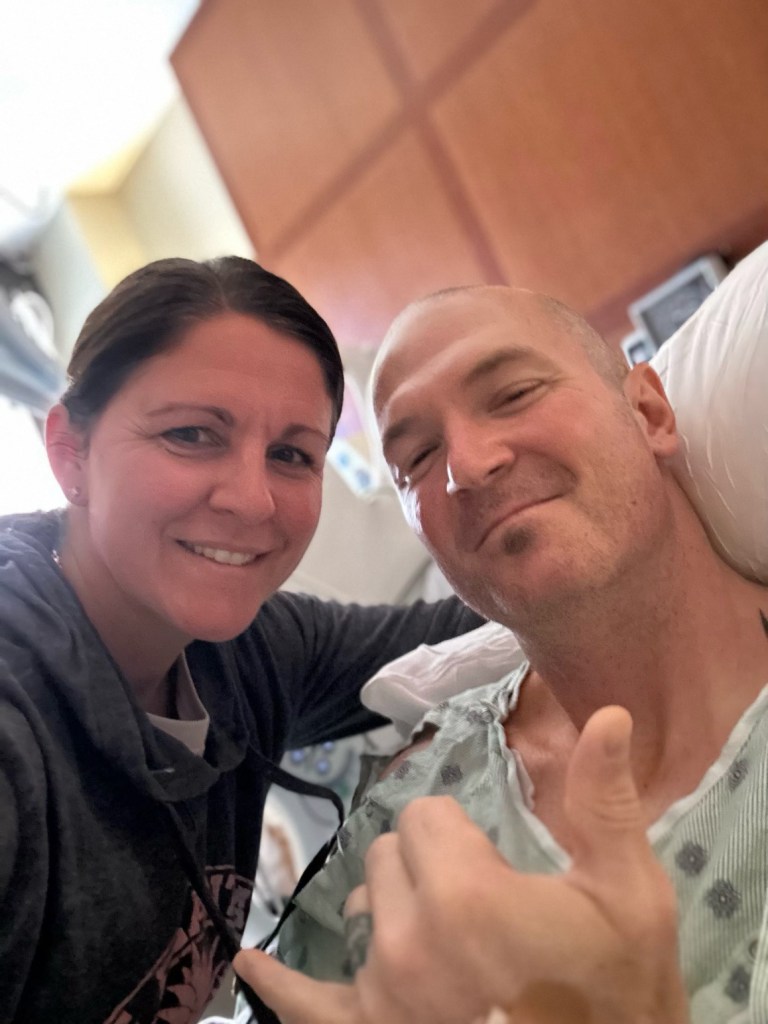
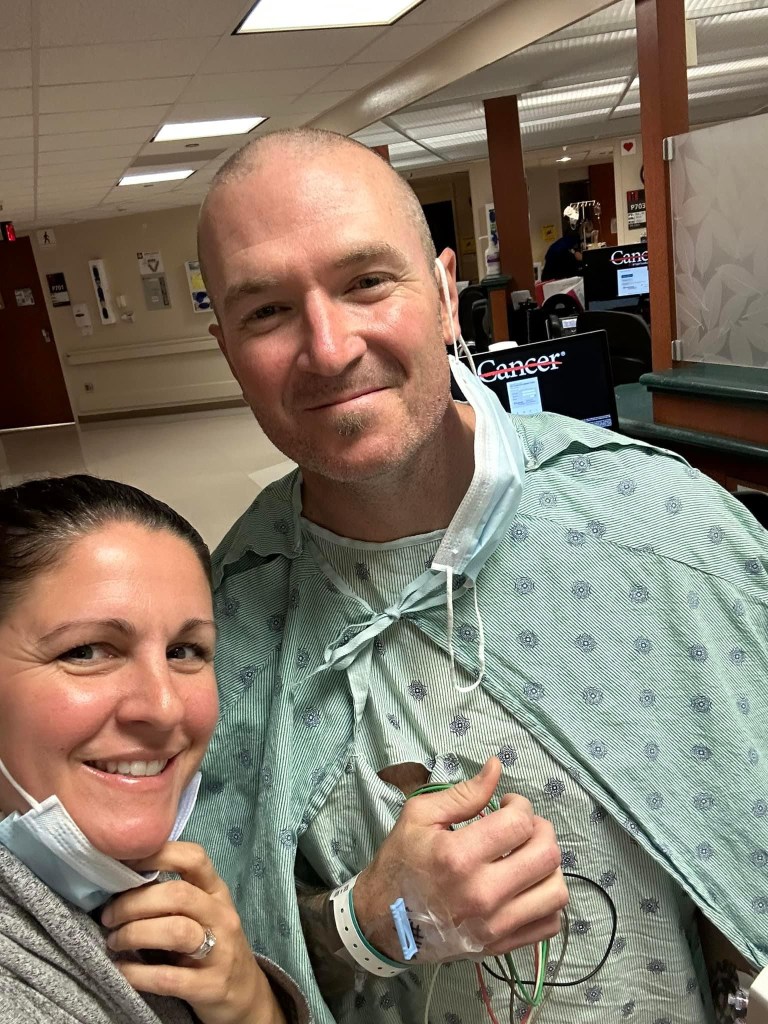
At MD Anderson for Murph’s surgery
BJ Ganem recalled Murph once musing, “It is during our darkest moments that we most focus to see the light,” reflecting a wisdom and foresight beyond his years. And Alissa, assessing the experience they had together through the cancer diagnosis and all the actions afterwards, offered this assessment of her husband: “There really isn’t anything that he can’t do.”
In fighting cancer, Murph became more than a survivor; he became a beacon of hope and a testament to the power of the human spirit. His relentless discipline and persistence spoke volumes of his character. But he wasn’t fighting just for himself; he was fighting for his brothers and sisters, for a future where such battles could be won before they even began.
What is a Leader?
I believe that the word leader is one of the most misunderstood words in the human language. When I hear someone characterize another as a leader, I will often ask what that person did to achieve that laudatory label. The answers to this question often take the form of the ‘leader’ having done something that personally benefited the individual commenting.
“He gave me time off to take care of things I needed to do.”
“She got the legislation I believe in passed.”
“She didn’t come down hard on me when I made a mistake.”
“He praised me in front of the group.”
“She really knows a lot and teaches me things I didn’t know.”
“He made me feel heard.”
Those examples all may be great examples of what a leader does, but I think they come up far short of describing what a leader is. Leadership techniques should be learned and put into practice at all appropriate times, but they miss the point of what the essence of a leader is.
Simply put, a leader is someone who consistently gets the most of themselves and others around them. That’s it.

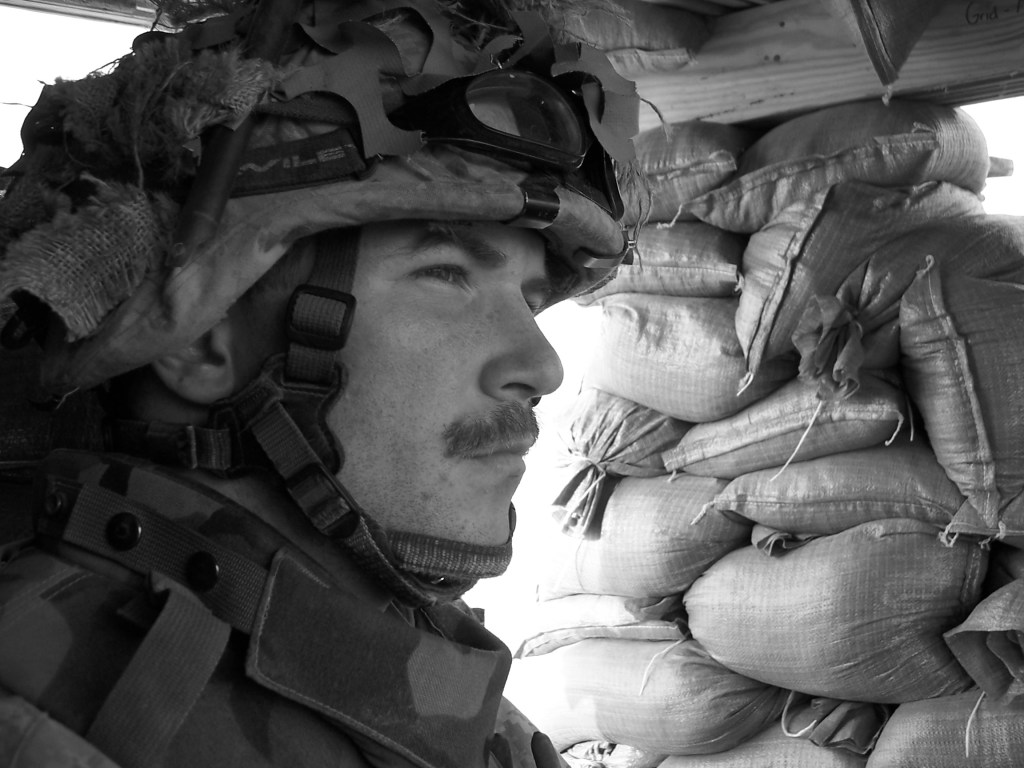

I wrote earlier that Murph may be the best leader I have ever met. He’s certainly not the loudest or most gregarious. He doesn’t beat his chest and the next time you hear him say ‘look at me’ will be the first time.
But what Murph does better than any I have seen is to get the very most of himself and everyone around him, on a very consistent basis. Through his example. His preparation. His willpower and relentless discipline. And his absolute unwillingness to accept any outcome other than mission accomplishment.
Ryan Baudhuin put it succinctly. “It is his mindset that is just different, almost freakish. I have never met anyone more mentally tough and disciplined than Keegan Murphy.”
His mindset is supplemented with a clock speed17 that is just faster than others. This gives him great learning agility. “Murph is probably the purest problem solver that I know. He studies a problem then he succeeds in solving it because he attacks it from multiple angles simultaneously,” said Bill Schmanski. “He continually applies feedback in real-time and will optimize until it is totally locked in. He does it in everything I have seen him start with no experience; paramedicine, the SWAT team, starting a family, and beating cancer.”
I have always been dismissive of ‘leaders’ who point to rank, title, status, or accumulated possessions as evidence of their leadership prowess. Those who do that too often are crippled by insecurity, incompetence and crippling ambition – I don’t consider them leaders in any meaningful way.
A leader is not a position. Instead, it is a conduit to consistent results. An extremely dependable entity. The person with a say/do ratio of 1.
When I attended the Naval Academy, joined the Marine Corps, and ultimately selected infantry as my Military Occupational Specialty (MOS), I dreamed of becoming a complete leader. The type of leader who others would willingly choose to follow. Someone who could be counted on to get the job done. Every time.
I dreamed about becoming what Murph has proven himself to be. He is a leader.
The Best of Us
Scenes from two of my favorite movies always bring Murph to my mind, each encapsulating facets of his essence. The first unfolds in 13 Hours: The Secret Soldiers of Benghazi, where David Denman portrays Dave “Boon” Benton. Amidst the chaos of Libya, Benton recites a line from a book he’s reading, “All the gods, all the heavens, all the hells are within you.” This line resonates powerfully through the scene, mirroring the deep intellect that underpins Murph’s imposing physical presence.
In contrast, Armageddon presents Bruce Willis as Harry Stamper, a character whose determination to save the planet mirrors Murph’s indefatigable spirit. Faced with an asteroid hurtling towards Earth, Stamper’s decisive action to detonate a nuclear bomb, ensuring the survival of humanity, epitomizes the essence of unwavering resolve. At the core inflection point in the movie, when the decisive action was in doubt, Stamper’s friend AJ says, “Harry’ll do it. I know it. He doesn’t know how to fail.”
Like Stamper, Murph personifies the ability to overcome insurmountable odds with an unwavering refusal to even consider failure as a possibility. His life and actions demonstrate the incredible potential within us to perform super-heroic feats through sheer determination. Family members, Marines, firefighters, and law enforcement officers have all witnessed this exceptional resilience time and time again.
The phrase the best of us often finds itself diluted in today’s language. Yet it truly is the correct descriptor of Murph. His life stands as a lighthouse, guiding current and future generations towards the realization that extraordinary lives are within our grasp.
“I have very few people in my life that I consider ‘heroes,’ said Franco Garritano, who served with Murph on the La Crosse Fire Department. “But Keegan is one of the men that I would consider to be so.”
“The word ‘quit’ isn’t in Keegan’s vocabulary,” said Nick Vento. “He accomplishes everything he sets out to do in a dominant way. Marine Corps, firefighting, running the USMC Marathon, running his first, or second, Ironman, Cancer. No mountain is too big.”
Vento continued: “I’m proud of his grit, his determination, his family life, his spiritual life. I look up to him as a man, as a father, as a Marine, as a cancer survivor and as someone whose actions are larger than his words.”

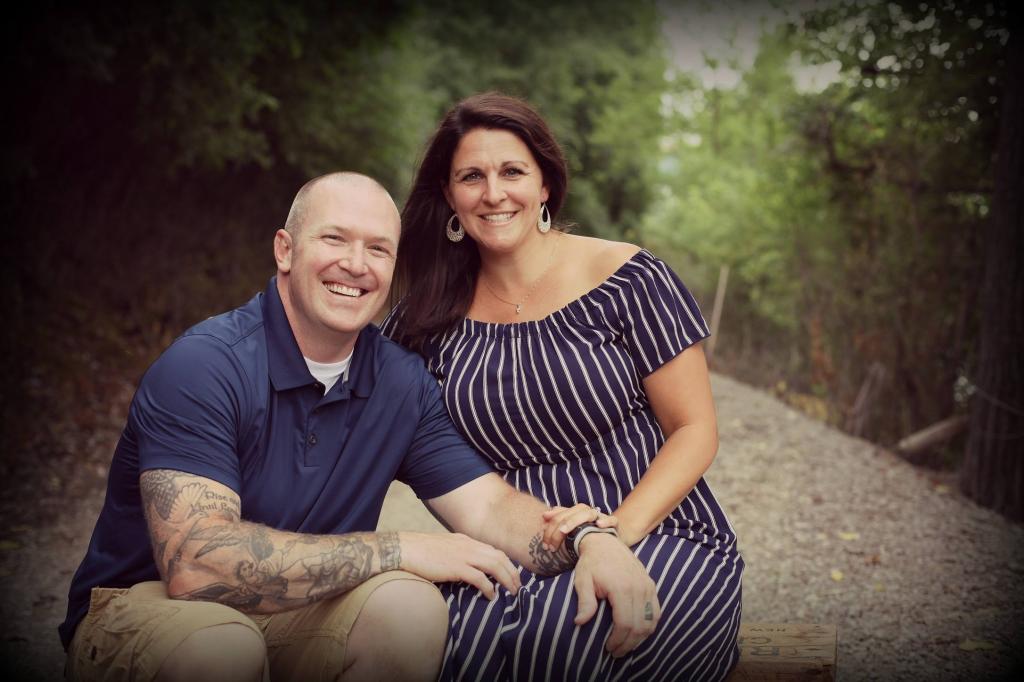
This resilience and unwavering spirit not only define Murph but also inspire an uncountable many who proudly rank themselves among his admirers. The depth of his character, his dedication to family, service, and an unbreakable spirit in the face of adversity, serves as a cornerstone of his legacy.
“Anyone who has spent more than a few days with Keegan already knows exactly who he is. He is the most consistent human I have ever met,” says Steve Jahr. He always sticks to his high morals, he is always honest, he is proud of his military, fire, and SWAT service.”
Murph’s friend and former co-worker on the Appleton Fire Department, continued: “He loves God, he loves and adores his wife and kids, he never waivers in his beliefs, and if I ever need literally anything, he would drop whatever he’s doing to help a friend out.”
Jahr finished with an ultimate compliment. “I strive to be like Keegan. I hope to be as good of a man as he is. I hope I can mentor people the way he does. I attempt to conduct myself the way he always has.”
Murph’s sister Kaleigh speaks with immense pride. “I don’t know his war stories, I’ll let his Marine brothers tell those, but what he’s gone through these past one and a half years is unreal,” she said. ”He chose to live and now he’s one year post double lobectomy and he’s training for his second Ironman. Sometimes I am at a loss for words when I think about all the things he has accomplished.” Kaleigh, us too.
The enduring love story between Keegan and Alissa is still growing. Their relationship stands as a resonant affirmation of love’s power and commitment, setting a powerful example of what marriage can aspire to be. Alissa’s words, filled with love and admiration, echo the shared journey of growth, resilience, and boundless love that characterizes their life together. “What I want to say is that I love him forever and I love the life we have created,” said Alissa. ”He is my best friend, and we are so incredibly blessed that God led us to each other.”
Murph is equal in his thoughts about his wife. “Alissa is my rock that I have leaned on heavily since the day we met. She has been next to me through everything, my entire adult life,” Murphy said. “I believe God put her in my life knowing the mountains and valleys that were waiting in my future. He knew the trials we would face, and he gave us each other to travel together side by side.”
Murph recognizes a vital quality that most lasting marriages experience – the ying and yang of a complementary couple. He explains, ”She knows how to temper me yet support me. She taught me how to love unconditionally. She picks me up on my darkest days and is the first to help celebrate every victory. I absolutely could not imagine this journey without her. We are a team, we have built an amazing life together, and I know God has big plans for our future.”
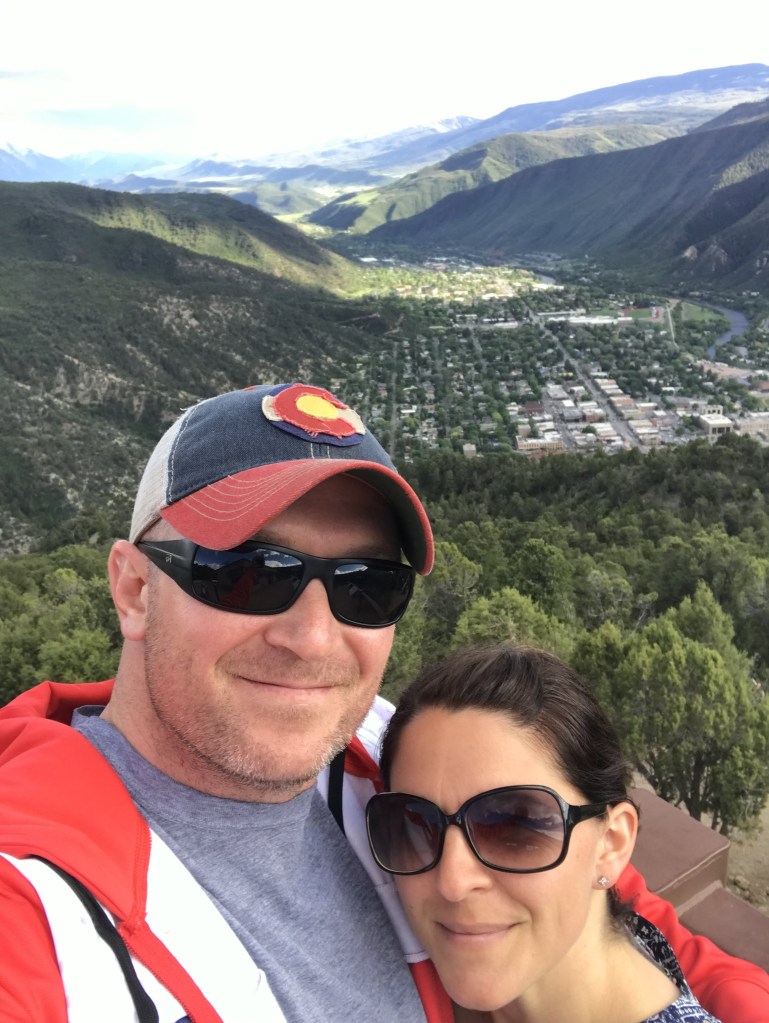
In November 2023, Murph appeared as a guest on Ryan Lonergan’s Fragout Podcast.18 The night before the recording, Lonergan reached out to a few of us who know Murph well, asking for thoughts that he might read during the episode. I shared my reflections, and Ryan read them aloud to Murph on the air. It was a rare moment when I truly captured and conveyed my exact thoughts about another human being:
The Devil whispered into my ear, ‘You are not strong enough to withstand the storm.’ Today I whispered in the devil’s ear, ‘I am the storm.’ Murph, I will forever associate this saying with you. I am so grateful to have had the opportunity these last 20 years to bear witness to your excellence. In Iraq, you and 3rd Platoon took on an impossible mission, and then accomplished it! Your incredible combination of patriotism, intelligence, physical stamina, faith, and love for those you served with made you the perfect combat leader. Almost two decades later, these traits were once again put to the test as you took on the impossible mission of beating stage 4 cancer. You approached each day with the same excellence as what we saw daily under the bridge in Iraq. And one year later, you have once again accomplished the impossible mission. In a world that feels vulnerable to events and circumstances outside of your personal control, you are the example of what is accomplished by 100% delivering on that which we can control. You are the storm, shaping the environment around you in every way that is positive and good. I am in awe of you. Semper Fidelis, my friend.
In reflecting upon Murph’s life to date, it is abundantly evident that his legacy transcends the battles he fought. His is a legacy enriched by the lives he’s touched, the inspiration he’s fostered, and the indelible mark he is leaving on the world. Murph’s story teaches us that heroism extends beyond the adversity we face; it is about uplifting others, championing the honorable, and leaving the world a better place. His legacy, vast yet humble, bold yet compassionate, doesn’t clamor for attention but commands respect and admiration. It is a legacy that whispers to the future, “Be good, love fiercely, and serve selflessly,” embodying the very essence of what it means to be the best of us.
Epilogue
A few months prior to the finalization of this narrative, on February 27, 2024, we lost Rob Wiltse. Rob served in 3rd Platoon alongside Murph and numerous others mentioned throughout these pages. I had the privilege of attending his memorial service, joined by several others from Golf Company.
The song “Brothers in Arms” by Dire Straits resonates deeply with the essence of our shared service, particularly the line, “You did not desert me, my brothers in arms.” This sentiment echoed in my mind during the memorial, capturing the unbreakable bonds that had been forged between Rob and our guys. Those who traveled, whether from near or far, to honor Rob’s memory, were united in a singular, enduring truth:
In our time together, Rob stood unwaveringly with us, his brothers in arms. He was an integral part of one of the finest units our Marine Corps has ever produced. His commitment to duty was unfailing. Amid the uncertainties and challenges of conflict, Rob was a constant, a reliable force whose dedication never faltered.

As we offer him our final salute, our farewells are layered with the traditions of the service to which we’ve dedicated our lives. “Fair Winds and Following Seas,” we offer, honoring our nautical heritage. “Til Valhalla,” we proclaim, acknowledging our warrior spirit. And “Semper Fidelis,” we affirm, because our service together was forged in a promise that will never go unbroken.
Footnotes
1The Diner was previously known as Connie’s Diner. This used to be one of Keegan’s grandfather’s favorite breakfast spots. The two of them had eaten there together many times over the years.
2Shinny stick hockey is a form of the game often played in the basement, with small goals and a little foam ball. And the players operate on their shins and knees.
3Fort McCoy would be a base that Murph would go on to routinely train at when in the Marine Corps.
5A jack has special significance in Euchre. Its use can significantly alter the outcome of the game. The game of Euchre is one popular in Midwest states. If you have never played it, you have not yet lived a full life.
6When we arrived in Iraq, the MSR Tampa mission was one of the most important missions across the country. The insurgency was full throated at that time and beyond large-scale direct-action engagements (i.e., Fallujah), most of the enemy strategy surrounded harming Iraqi Army Soldiers, Police, citizens, and key infrastructure. Had the logistic chain facilitated by MSR Tampa been continually interrupted, so too would have the whole war effort.
7As shared in Chapter 1 (Nick Vento), Lieutenant Colonel Mark Smith was our extremely innovative Battalion Commander. He was a leader like very few who have ever come before him. He had a different vision for conducting operations in our area than the unit that preceded us. Smith, an Indiana State Trooper in his civilian career, knew the key to fulfilling the mission we had in the environment we were in was generating almost overwhelming presence. If we could establish a consistent presence everywhere, not only could we maintain the level of security that was needed, but we would have a much greater opportunity to win the hearts and minds of the local Iraqis. And as tends to be the case in any counterinsurgency operation, that is a critical element in winning. Colonel Smith’s legacy is secure forever – it was an incredible gift to have served under his command.
8Though I cover the MSR Tampa mission briefly in this chapter, it is important to understand just what an accomplishment it was for one platoon to (very) successfully maintain its security through the time were there. When we arrived, the stretch of Tampa we covered was coded black, meaning it was the highest danger zone it could be. By the time we left the country, it had been downgraded and even opened up to limited civilian traffic. I have seen some incredible feats in my life – that was right up at the top. To understand more about the detail of MSR Tampa and our mission tied to it, see the Introduction and Chapter 3 (Ryan the “Buddha”).
9It is more accurate to say that those in 3rd Platoon would describe their unit as the best platoon in the entire Marine Corps.
10Bracketing is the method of firing a round short of the target, then long of the target, and then making adjustments to fire on target. The fact the squad was bracketed quickly showed just how proficient of an insurgent force they were up against and how incredibly important it was to get the enemy mortar crew out of commission as quickly as possible.
11Lance Corporal Ryan Cantafio would be killed a few days later, in an IED attack that was described in Chapter 3. His actions this night saved several lives of the members of Gillitzer’s squad. His story is one of incredible resilience, perseverance, and service to others.
12A PRR is a short-range personal radio device used by fire teams and squads to stay in communication with each during operations.
13To be fully honest to who I am, if I were identifying the best superhero, it clearly would be Captain America, Batman, or Iron Man. But for reasons I will never fully understand, the Superman analogy is way more accepted in society for the point I am trying to make here. Thus, I conform.
14Chesty Puller is the most decorated Marine in history and is a beloved figure in the Corps to this day.
152019 Pew Research Center survey of Veterans. https://www.pewresearch.org/short-reads/2019/07/10/majorities-of-u-s-veterans-public-say-the-wars-in-iraq-and-afghanistan-were-not-worth-fighting/
16Stage IV lung cancer survivor: Targeted therapy and surgery left me cancer-free. By Keegan Murphy. https://www.mdanderson.org/cancerwise/stage-iv-lung-cancer-survivor–targeted-therapy-and-surgery-left-me-cancer-free.h00-159695967.html?fbclid=IwAR0uFCrpMSBcqgZ–CfDQWowM4bGumT0LVkNyJxJ_Sp2vebVdT5tJKIyCI4_aem_AWmtXtpwtG2TUxIN2rKBd79ApWhye3YkuZKdvpCmPs1vuT3icW8cFb_fdKkLJgCR5uTZLErHCqwt6hMFF0C30FlG
17Clock speed, also known as clock rate or clock frequency, is a measure of how fast a computer’s central processing unit (CPU) can execute instructions. I am, by no means, suggesting that Murph is a machine in how consistent and reliably excellent he is. I think.
18The full episode featuring Murph can be found at https://fragoutwivet.libsyn.com/se5-205-keegan-murphy-marine-corps-veteran-cancer-survivor-firefighter. Ryan is an incredibly talented podcaster who has been serving fellow Veterans in the state of Wisconsin for many years.
 Why They Served
please hurry!!
LikeLike
Chap 7 Preview serves to open the book on Murph, his untamed spirit and his legendary commitment to others. The author’s unshakable belief in Murph and his brand of patriotism, and unyielding objective to eliminate any “incredulity gap” that Murph’s story might generate.
LikeLike